Last time, we honored the fog. Now, we rise to the mountaintop—not to escape, but to see.
Microscope vs Mountaintop
It is normal for the small self to feel overwhelmed, angry, bitter. It sees injustice, chaos, and distortion— and it reacts. Not because it is wrong, but because it cannot see the whole.
The ego sees through a microscope. It magnifies what is near, what is personal, what threatens its sense of control. It sees only a sliver of reality, but believes it sees everything.
From this view, the world looks unbearable. From this view, mercy seems naïve. From this view, fear feels like wisdom.
But there is another view. The mountaintop. Where the soul sees the whole landscape— the valleys of grief, the rivers of mercy, the long arc of becoming.
The Gift of Contrast
The spiritual goal of humanity is not just to behave well— but to know who we are, so we can be who we are with clarity, compassion, and power.
But knowing requires contrast. We cannot know light without the presence of shadow. We cannot know ourselves as Christ without the presence of anti-Christ.
This is the paradox of awakening: even distortion serves. Even the soul who walks in shadow is part of the great unfolding.
From the mountaintop, we see that every soul— even the one who embodies the opposite— is serving humanity’s evolution.
Not by being good, but by being a mirror. A contrast. A catalyst.
We do not excuse the harm. But we honor the soul’s risk. To carry distortion so others might awaken.
The Mirror of Becoming
The soul doesn’t just learn through harmony. It learns through contrast. And sometimes, the clearest mirror is the one that shows us what we are not.
When we encounter distortion— cruelty, manipulation, egoic grasping— we are not just witnessing another’s struggle. We are being shown our own edges. Our own fears. Our own unhealed places.
The mirror does not accuse. It reveals. It says, “This too lives in you.” Not to shame you, but to awaken you.
From the mountaintop, we see that even the shadow is part of the soul’s unfolding. Even the one who walks in distortion is serving the whole— by showing us what must be released to become who we truly are.
Mercy from the Mountaintop
Mercy is not blindness. It is vision. It sees the whole, not just the wound.
From the mountaintop, mercy does not excuse distortion— but it understands its roots. It sees the fear beneath the cruelty, the ache beneath the ego, the longing beneath the grasping.
Mercy does not rush to fix. It chooses to witness. To hold space. To honor the soul’s journey without condoning the harm.
This is not passive. It is powerful. To see clearly and still choose compassion is the highest form of strength.
Mercy is the soul’s response to the mirror of becoming. It says, “I see you. I see your risk. I see your ache. And I choose to walk beside you.”
Mercy for the Shadow
Some souls come to embody clarity— to show us who we truly are. Others come to embody distortion— to show us what we must release.
Both are mirrors. Both are teachers. Both are part of the soul’s unfolding.
Long ago, Jesus of Nazareth walked as the embodiment of the Christ— a living picture of divine clarity. Today someone walks as the embodiment of distortion— a living picture of ego’s grip.
We do not condone the harm. But we must not deny the reflection. His struggle with ego is our struggle. His descent into illusion is the shadow we all carry.
To pray for a soul in darkness is not to excuse its behavior— it is to honor the risk of carrying the shadow so others might awaken.
Cosmic Humor
From the mountaintop, the soul doesn’t just see clearly— it laughs. Not with mockery, but with love.
With the kind of laughter that bubbles up when illusion finally cracks and truth peeks through.
Cosmic humor is the soul’s way of saying, “Oh, little one … you really thought you were in control.”
It chuckles at the ego’s drama, not to shame it, but to soften it. To remind us that we are more than our curated identities, our righteous opinions, our desperate grasping.
Cosmic humor sees the whole play— the hero, the villain, the twist, the redemption— and knows that every role is part of the awakening.
It doesn’t rush the story. It delights in the unfolding. It holds paradox with ease: grief and joy, clarity and confusion, Christ and anti-Christ.
And it whispers, “You’re doing beautifully. Even when you think you’re failing.”
Returning to Your Path
You may not feel like you’re on the mountaintop. You may still be in the fog, still wrestling with mirrors, still aching in the presence of contrast.
That’s okay. The soul does not rush. It walks with mercy. It learns through paradox. It laughs with love.
You are not behind. You are not broken. You are not failing. You are becoming.
So breathe. Be gentle with your small self. Let the soul rise slowly. Let the mountaintop come in its own time.
And when it does, may you see clearly. May you choose mercy. May you laugh with love.
There are seasons when clarity disappears. When the path vanishes beneath our feet. When grief, confusion, and emotional overwhelm roll in like fog— thick, disorienting, relentless.
We try to push through. We try to make sense. But the fog is not a mistake. It is a threshold.
It is the soul’s way of saying: “You are no longer who you were. You are not yet who you will be. Rest here. Be with the mist.”
The mist is not your enemy. It is the womb of transformation. It softens the edges of who you were, so the soul can reshape itself without the boundaries of certainty.
Be with the mist. Let it hold you. Let it blur the old stories until only Truth remains.
Adolescence of the Soul
Humanity aches like a teenager at this stage of consciousness development. Full-blown identity crisis. Raging emotions. Resisting guidance. Stirring up trouble. Spreading pain. Craving attention while fearing rejection. Longing to be seen, yet terrified of being truly known.
So we curate identities to hide our confusion. We create profiles, join groups, and express strong opinions— not from clarity, but from fear of invisibility. We don emotional armor: confidence, rebellion, religious certainty— while inside, we’re just aching to be loved.
And so we stumble. We lash out. We break what we don’t understand. Not because we are evil— but because we are still learning what it means to be whole.
The fog is not failure. It is the soul’s cocoon. A place where illusions dissolve so Truth can be revealed.
The wise watch with heartbreak— not because they’ve lost hope, but because they remember what it feels like to be lost and still becoming.
There’s no shortcut to wisdom. Only the ache. Only the fog. Only the long road through.
Confusion as Threshold
Confusion is not the absence of truth. It is the loosening of illusion. It is the soul’s way of saying, “Wait. Something deeper is being born.” When the ego begins to dissolve, the soul does not rush in with answers.
There is a space between— a holy in-between— where the old “I” no longer fits, and the true “I” has not yet emerged. This is the ache of becoming.
We ask, “If I’m not this, then what am I?” And the mist replies, “You are what remains when all else falls away.”
Like Frodo in The Lord of the Rings, we carry the ring— the illusion of control. Not because we love it— it is a heavy burden. But because we fear what we’d be without it.
Humanity is Frodo Baggins— clutching “my precious,” the ego’s illusion of control, identity, power. We carry it through shadow and struggle, not yet ready to release what defines us.
But the journey is not about keeping the ring. It is about throwing it into the fire— the fire of spiritual transformation. Not to be destroyed, but to be remade. Not to lose ourselves, but to become who we truly are.
The Illusion of Invisibility
When Frodo put on the ring, he disappeared— but the dark forces saw him more clearly. This is the paradox of ego’s illusion: we think we’re hiding, but we become more vulnerable to what harms us.
We curate identities to feel safe. We disappear behind confidence, rebellion, religious certainty, and curated belonging. But the more we disappear, the more entangled we become. The ego says, “Hide and you’ll be safe.” But the soul whispers, “Be seen, and you’ll be free.”
True safety is not in disappearing. It is in surrender. It is in letting go of the ring, and stepping into the fire that transforms without consuming.
Grief as Teacher
Grief arrives when the ring begins to loosen. When the curated self starts to fall away. When the soul whispers, “You are more than this.” And the ego trembles, “But this is all I know.”
Grief is not the enemy. It is the teacher who walks us to the threshold. It strips away what cannot stay, not to harm us, but to make room for what is true.
Grief softens the armor. It cracks the illusion. It opens the heart so the soul can breathe.
Grief is the emptying of the glass. We thought we were full— full of certainty, identity, direction. But grief comes and spills it all. Not to punish, but to prepare.
Grief clears the clutter of ego. It washes away the stories we clung to. It leaves us trembling, but open.
Only then can mercy pour in. Not as an answer, but as presence. Not to refill the glass, but to teach us how to drink from something deeper.
Emotional Overwhelm as Invitation
Emotional overwhelm is not a sign of weakness. It is the soul’s alarm bell— a signal that something sacred is stirring beneath the surface.
We feel too much because we are becoming more. The heart stretches to hold what it once avoided. The body trembles with truths it cannot yet name.
This is not dysfunction. This is initiation. Overwhelm invites us to pause, to listen, to soften the grip of control and let the soul speak.
It is not asking for solutions. It is asking for presence.
To sit with the ache. To breathe with the storm. To trust that what feels like too much is exactly what is needed to become who we truly are.
The Long Road Through
There is no shortcut to wisdom. No bypass around the ache. No fast-forward through the fog. Only the slow unraveling of what no longer serves. Only the tender shedding of who we thought we had to be.
The soul does not rush. It walks with mercy. It waits in silence. It trusts the fog to do its sacred work.
This is the long road through— not a detour, but the path itself.
And though the way is unclear, you are not lost. You are becoming.
Closing Blessing
If you are in the fog, may you be held.
May you be remade. May you trust the long road through. May grief soften you. May mercy find you. May the ache become a doorway to the truth of who you are.
In my last post, I wrote that the Anti-Christ is the ego. When I use the term “ego,” I’m not referring to “ego” as Sigmund Freud defined it but as defined metaphysically. Metaphysically, the ego is defined as the idea of “I” as a separate being. It is the sum of all of the beliefs we carry about ourselves. From the time we are born, we begin to collect ideas about ourselves in the form of labels, beginning with the very first label with which we are assigned: our gender.
There are many more labels to come – labels related to our race, religion, socioeconomic class as well as the labels we are given by people in authority and our peers. The more labels we take on, the smaller we become because there are behavioral expectations associated with each label. For example, if we are labeled “male,” there are societal norms around “maleness” that we must obey in order to be accepted. The same is true with race, religion, and socioeconomic class. Societal pressure to conform to the behavioral norms associated with these labels restrict our behavior and keep us in line through the fear of rejection.
As we grow up, we are offered many more labels both by people in authority and our peers. Some of the labels are positive, and some are negative. Either way, labels are burdensome because they place expectations on us. Each label is a box inside a box inside another box, and our space to be keeps getting smaller and smaller. By the time we reach adolescence, we may feel as if we are suffocating inside a very small box, especially if we have been forced to conform to many labels that just don’t fit.
Our eternal nature is carefree and limitless – full of peace, love, and joy. When we are born, we walk into a theater called “Earth” and get assigned a role (our name). Throughout the acts and scenes of our life, there are many directors working hard to mold and shape us into what they think our character should be. After many years of playing this character, we forget who we really are. This is what happens to us on micro-level as individuals and on the macro-level over the history of humankind.
We think we are only this earthly character, and we are filled with fear. Why? Because it is a work of fiction. It exists only as long as we are in this theater called Earth. The moment we exit the theater, the character ceases to exist. When we forget our true eternal identity, we have no choice but to cling to this earthly identity, a house built on sand (Matthew 7:26-27). We try to fortify the house through the accumulation of wealth and power, but no amount of wealth or power can change the truth that this “personal self” is ephemeral.
Our earthly character isn’t evil in and of itself. We are meant to live this life as a particular expression of Being, and we are born with the traits, tendencies, and talents we need to play our role gloriously. We need the ego in order for Being to experience each individual expression (or “character”). And just an author fondly remembers every character he or she created, every “character” we ever played on this stage called “Earth” is lovingly held in the memory of Being.
We are filled with joy when we are allowed “to be” – when we are playing our proper role, not the one assigned to us by humans. Labels help us to conceptualize and experience this unreal world of duality. However, since labels belong to this unreal world, they are also illusions. Male and female, white and black, Christian and Muslim, straight and gay, American and Russian – none of these labels exist in Reality. How can they when in Reality, there is only one Being?
When we are lost in our earthly identity, we forget this. We treat our labels as if they are real, and we create a hierarchy of worth based on our own judgments. Male is more worthy than female; white is more worthy than black; Christian is more worthy than Muslim, etc. At that point, we have made a god of the human ego and have broken the First Commandment: You shall have no other gods before me.
This “other god” is the anti-Christ, and it has been fortifying itself by accumulating wealth and power through its make-believe “caste system” for ages. This has created an extremely unbalanced distribution of wealth in our world, causing suffering for the majority.
The truth that Jesus was a peaceful, universalist is inconvenient for many people today just as it was in Jesus’ time. Like the Zealots 2000 years ago, there are those who want to believe in Jesus as a military leader with nationalistic values. Certainly, Jesus was loyal to his people, offering his message of salvation to the Jews first, but he didn’t exclude others because he knew that every living being is part of Life, part of the Christ, whether they know it or not.
There are also those who have created exclusive Christian religions based on rules that have no basis in what Jesus taught while they ignore his fundamental teachings, such as “Do not judge others” (Matthew 7:1-3) and “Love your neighbor as you love yourself” (Mark 12:31). In Matthew chapter 15, Jesus condemned the Pharisees for this hypocrisy. They complained to Jesus that his’ followers didn’t follow the proper handwashing traditions. Jesus responded by calling them out for breaking the fifth commandment. Instead of honoring their father and mother, the Pharisees followed their own tradition whereby they declared their possessions as “Corban” (dedicated to God). This gave them an excuse to avoid financially supporting their parents.
We are at a crossroads. We all have free will. We must each make our choice: the Christ or the anti-Christ? Unity or division? Love or hatred? Peace or war? Joy or suffering? Reality or illusion? Bonds between family and friends will be broken, for the light cannot abide the darkness, and the darkness cannot withstand the light.
Are you ready to choose? Time is running out.
Stay tuned for my next post: The End Times: The Choice
Last fall, when we were planning our relocation to Costa Rica, my brother said to me, “You’re coming back for Josh’s wedding, right?” I replied, “Of course! I can’t miss my only nephew’s wedding!” As a result, on October 3rd, Tabatha and I boarded a plane in San José bound for Miami. A couple of hours later, we boarded another plane to Philadelphia.
I can’t say I was looking forward to returning to the U.S. To be honest, I was dreading it.
The energy in Costa Rica is so peaceful, laid-back, and friendly. The energy in the United States is the opposite. I didn’t want to be immersed in that energy again. As we were preparing for the trip, I had said more than once to Tabatha, “I don’t want to go back.”
I had to go back. I truly couldn’t miss my only nephew’s wedding, so I psyched myself up for trip. Tabatha, the master planner, had put together a nice itinerary for the week-long sojourn: visiting friends and family, going shopping, enjoying favorite restaurants, and of course, attending the wedding. I kept telling myself that I would enjoy these things.
Well, after only two days in the U.S., I got sick. The night before the wedding, I felt so lousy that I took a COVID test and prayed. We had already visited several friends by that time, and a positive result would mean that we had not only exposed these friends but also that we weren’t going to my nephew’s wedding – the main reason for the trip.
Thankfully, the COVID test turned out negative.
We attended the wedding and the reception dinner. We did a little dancing, but with my being sick and Tabatha’s knee still on the mend, we didn’t do any serious boogeying. After dinner, I’d had enough, so we decided to go back to the hotel room. We missed the fun of them cutting the cake and feeding it to each other; nevertheless, we so thankful we made it. I saw people I hadn’t seen in ages. Tabatha finally got to meet my nephew and his family. Best of all, we got to enjoy watching my brother, the father of the groom, have a total blast!
The day after the wedding, I noticed the tell-tale signs of a sinus infection. I had forgotten all about my fall allergies. When I lived in northeast PA, I started taking Allegra in August to prepare for them. I have gotten sinus infections and bronchitis in October more than once over the years. I didn’t think about the fact that we were returning to the U.S. during the worst time for my allergies. I was unprepared, and my sinuses were like, “What the …?”
A trip to one of those ready care places confirmed my suspicions, and I was prescribed antibiotics.
There were only a couple of rough days. Once, we were having lunch with friends at our favorite diner. I didn’t feel like eating. That’s how lousy I felt. Ask anyone – I always want to eat. I felt so lousy that I excused myself to take a nap in the rental car. Another day, we had a reservation for our favorite seafood restaurant. I wanted to go, but Tabatha correctly pointed out that people might not enjoy eating dinner with my sniffly-sneezy-snotty self sitting nearby, so we got our meal to go. We ate in the hotel room while watching the Eagles football game on TV.
We were really enjoying ourselves. The food was good. The Eagles were winning. Then there was a special news report about the Hamas attack in the Gaza Strip, with images of dead bodies lying in the streets. It was truly terrible, and our hearts go out to those who are suffering in the Gaza Strip.
We weren’t prepared to see those disturbing images during our dinner time. It was prime-time TV. Children could have been watching. There was no warning, so even parents weren’t even given the opportunity to shield their children’s eyes from those images. There was no choice. Yes, we need to know what’s going on, but do we really need to see the graphic details? If we’re that emotionally numb, it’s the media’s fault for feeding us a steady diet of violence and gore.
Truly, the American news media seems to have lost all discretion.
Going back to the U.S. caused some conflicting emotions within me. It was very comforting to once again see and hear English everywhere I went. My brain didn’t have to work so hard to translate. And it was very comforting to enjoy American food. My taste buds didn’t have to acclimate to different flavors and textures. I enjoyed my nephew’s wedding, visiting family and friends, shopping, and eating some of my favorite foods. There was certainly some comfort in being in familiar surroundings again.
It was truly wonderful to see familiar faces in familiar places.
But there was a high price to pay to enjoy those old comforts, and not only for my sinuses. It wasn’t comforting to be bombarded by the media’s fear and negativity. It also wasn’t comforting to have that familiar on-the-road experience of someone obnoxiously beeping their horn and yelling at us for causing them a nanosecond delay. And no matter where we went, there was always the fear in the back of our minds that someone might start shooting.
I concluded that the U.S. is a nice place to visit, but I wouldn’t want to live there again.
Synopsis: Like the Sadducees, some Christians mistakenly apply our worldly rules to the Kingdom of Heaven, wishfully thinking that age is much like this age.
Scriptures: Luke 20:27
We humans love to debate. Tis the season of political debates. Over the past few years, though it seems as if political debating has become open season. Any time, any place. That’s how it is with religious debate too. We love to debate about religion – any time, any place – so much so that some of the things we fixate on and argue about can be kind of silly.
For example, many people take the Bible story of man’s creation very seriously. They consider it a flawless account. Unfortunately, there are holes left in the story that some Christians’ inquiring minds can’t help but poke at. Two particular holes that are engage many Christians in serious (but hilarious) religious debate involve Adam and Eve’s belly buttons.
Did Adam and Eve have belly buttons? I mean, since God formed Adam from mud and Eve was born from Adam’s rib, neither of them would have had a belly button, right? Ah … but there’s also the possibility that God gave Adam one for purely aesthetic reasons.
Some artists have skirted this debate by placing fig leaves over the area in their representations of Adam and Eve. Some have painted Adam and Eve smooth-bellied, and some have given them belly buttons. Which leads to another very serious debate – where they innies or outies?
Today’s gospel reading is about a religious debate – certainly about a more serious topic than Adam and Eve’s belly buttons. The Sadducees were Jews who did not believe in a future age where the dead would be raised. They went toe-to-toe with Jesus about this, and we can learn a lot from his response.
First, let’s review the context. Jesus had already made his triumphant entry into Jerusalem, and he caused quite a stir. People started asking, “Who is this guy everyone’s yelling “Hosanna!” about? Jesus immediately cleansed the Temple by driving out the merchants and money-changers. Then people started asking, “Who does this guy think he is?”
While Jesus was in Jerusalem, he frequented the Temple, from where he taught whoever would listen – even those who stood around hoping for a way to discredit or condemn him. The chief priests and scribes saw Jesus as a serious threat, so they tried to trick him into saying something that would justify their arresting him.
One day, while Jesus was teaching at the Temple, the chief priests, scribes, and elders came and asked him, “What gives you the right to drive out the Temple money-changers?” In his usual style, Jesus answered their question with a question: “Did the baptism of John come from heaven, or was it of human origin?” After responding that they didn’t know, Jesus said, “Well then, I’m not going to answer your question.”
Then he told the Parable of the Wicked Tenets, where he spoke out against the chief priests and scribes. He identified himself as the beloved son of the vineyard owner and them as the wicked tenets who killed the son and lost the vineyard.
The chief priests, scribes, and elders were enraged by this, so they started sending spies to try to trap Jesus by asking him questions that might get him into civic or religious trouble if he didn’t answer right. First was a question about paying taxes, which they thought would force Jesus between a rock and a hard place. Jesus brilliantly responded to give to the Emperor what is his and to God what is God’s.
That brings us to today’s scripture reading. The Sadducees now take the opportunity to question this master because they have a theological ax to grind with the Pharisees.
The Sadducees and Pharisees differed in their theological viewpoints. The Sadducees believed in following the Law as found in the Torah and only as found in the Torah – the first five books of the Bible. They considered anything else immaterial, including the Pharisees’ many “Traditions of the Elders,” which the Sadducees felt served only to complicate the lives of the Jewish people.
On this point, Jesus agreed with them.
The Sadducees didn’t believe in the resurrection of the dead and the afterlife. They believed that the only life we have is this world right here and now, and it’s our responsibility to follow God’s Laws. If we don’t, we suffer. That’s all there is to it. There’s no “other world” of a future time where God will bring dead people back to life and bring justice down on their oppressors.
Luke clearly points out the hypocrisy of the Sadducees’ asking Jesus this question about the resurrection when they themselves do not believe in the resurrection. They are simply trying to “stump” this master teacher with their brilliant scenario that they think surely makes the Pharisees’ doctrine of the resurrection ridiculous.
If Jesus is stumped, then their theological position denying the resurrection is bolstered. Their scenario probably wasn’t new to the Pharisees. We can image them rolling their eyes: “Oh, for crying out loud! Here we go again. “‘Now there were seven brothers ….’”
The command the Sadducees are referring to can be found in Deuteronomy 25:5-6. The purpose of the Mosaic law commanding the brother of the deceased to take his widow as a bride was to protect the nation by ensuring that every family and tribe would continue. No one’s family name would be lost.
We can understand how important it was for the Jews since it was believed that the Messiah would be born of a woman from the tribe of Judah, of the line of David.
It seems the Sadducees felt that Moses didn’t believe in the resurrection of the dead because of this law. They figure he must have believed that the only way to be “immortal” (in a non-literal sense) was to keep the family name alive through descendants. If he believed in the resurrection of the dead, why did he create this law?
The Sadducees didn’t believe that the Kingdom of God would arrive at some future time; it’s here now. If it’s here now, then it’s not any different from now. So, people would get married just like they do now, and if the dead are resurrected, that would create quite a problem for a woman had to choose a husband from among seven brothers.
It seems like a logical argument on the surface, but Jesus quickly points out the flaws.
Their first is an application error. They are applying a law from “this age” to “that age.” This is Not That. Jesus essentially says to them, “People die in this age, so they must get married and have children to carry on the family name. People don’t die in that age, so getting married and having children isn’t necessary. Moses created the law for this age, not for that age.”
Their second error is confusion about natural law, which lead to them making their first error. It’s clear that we live in a world of duality – of opposites – of this and that. If there’s “this age,” then there has to be “that age” because it’s impossible for anything to exist without its opposite. Its opposite must exist at the same time, so the Sadducees were correct on this point: the Kingdom of God (that age) is here right now, existing simultaneously with this age. How is that possible?
In the Taoist religion of the East, there a wonderful symbol that expresses this idea: the Yin and Yang symbol. Yin exists relative to Yang and vice versa: light is light relative to darkness. Without darkness, we can’t experience light because we need light as a reference point. Yin and Yang also transform into each other; day turns to night and night to day in never-ending cycles. These opposing forces complement each other nicely because they are in perfect balance.
We westerners might have trouble relating to an eastern symbol, so I brought a symbol we can better relate to: a coin. This coin contains a this and a that. Two opposites – heads and tails. Heads is not tails and tails is not heads. They are opposites; yet, they exist at the same time – united in one object.
We can think of this age as “heads,” and that age as “tails.” Heads is this age of time – and tails is that age of eternity. They are total opposites, yet they exist simultaneously. We experience whichever side is up. The other side is hidden, but that doesn’t mean it’s not there.
The Sadducees were ignoring the fact that in a dualistic world, if there’s a “this,” there must be a “that.” If there is this age, there must be that age. If we must marry and have children in this age of time because we die, then we must not need to in that age of eternity because we don’t die. This is not That.
Another error the Sadducees made is to focus only on the parts of the Scriptures that bolster their argument and not looking at the Scriptures as a whole. Common mistake, right? People zero in on the parts of the Bible that defend their argument, and ignore the parts that don’t.
Jesus says in verses 37-38, “And the fact that the dead are raised Moses himself showed, in the story about the bush, where he speaks of the Lord as the God of Abraham, the God of Isaac, and the God of Jacob. Now he is God not of the dead, but of the living; for to him all of them are alive.”
Jesus proved the Sadducees wrong, and some of the scribes responded, “Well said, teacher!” I guess some Scribes believed in the resurrection. I wouldn’t be surprised if the Pharisees were also very happy with Jesus’ response, thinking to themselves, “Finally, he agrees with us on something!” Truly, Jesus argued with the Pharisees quite a bit throughout the New Testament.
But neither the Sadducees nor the Pharisees were totally right or totally wrong. When it comes to the Great Mystery of Life, we humans have many philosophies, but no one has it exactly right. We have only ideas that may be closer to the truth than others, but until something proves our theories correct, we simply don’t know. There is so much that is hidden. That’s why we need faith.
We know more now than the people of Jesus’ time. Science has revealed to us that everything in the universe is made up of either matter or energy, and just like day and night, they transform into each other in never-ending cycles.
In this age of time, we experience ourselves as this body made of matter but on the flip side, in that age of eternity, we experience ourselves as something like energy. If we’re part of this never-ending cycle of transformation, from flesh to spirit and from spirit to flesh, maybe that’s why to God, we are all alive.
Sometimes we exist on the heads side, in the world of time and form, and we have a human nature. Inevitably, we transform and enter the tails side, the world of eternity and spirit, where we have a totally different nature because this is not that.
We may know and understand more now than people did back in Jesus’ time, but the more we know, the more we scratch our heads and realize how much more we don’t know about the Great Mystery of Life. Nevertheless, we love to debate what we think we know.
That’s why Luke included this debate in his Gospel. It’s a serious topic. It’s critical to the gospel message because if there is no resurrection, then Jesus didn’t resurrect from the dead, and there’s no salvation.
What does this debate have to teach us today in our modern times? Well, there’s a whole lot of religious debate going on today because many people want to argue that the rules of this age apply to that age.
They don’t. That’s lesson #1.
I personally love this passage because in it, Jesus says straightforwardly that that our human coupling rules are only for this age. In that age, souls do not have husbands or wives. Some might find this disturbing; others might find it quite comforting.
One minister tells the story of a woman with terminal cancer. Her husband suddenly died of a heart attack. At the funeral, well-meaning friends leaned over to her as she sat in her wheelchair and reminded her that they would soon be reunited in heaven, that it would not be long before they were together again. Later, when she was alone with the minister, she said, with tears streaming down her face, “I am never going to be rid of him, am I?”
So why would some say that the doors to that age are shut to souls who got a divorce in this age or souls who married someone of the same sex in this age when marriage doesn’t even exist in that age?
They say that because it’s comforting to them to think that age is the same as this age because they are too strongly attached to this age. They don’t want to let it go. I don’t know about you, but I don’t want that age to be the same as this age at all. I’m looking forward to something different.
Those who don’t understand who they are have no vision beyond this age and their physical existence, so they have no choice but to cling to this age. They cling to this age because they fear death, believing that this is all there is or because they desire the things of this world. They want to believe that they can take their bodies and all their stuff with them.
They can’t. That’s lesson #2.
We are part of a never-ending cycle of transformation, so we don’t need to fear death. We don’t die. We transform. But that doesn’t mean that we shouldn’t take care of our bodies. We are here for a purpose, and we can’t fulfill that purpose very well unless we keep our physical vehicle healthy.
As humans beings we also naturally have desires, but it’s our responsibility to keep our desires properly balanced. We must be willing to let go of everything that belongs to this age.
The Buddhists are really good at letting go. Richard Rohr is an American Franciscan friar ordained to the priesthood in the Roman Catholic Church in 1970. In his YouTube video, “How Buddha Helps Me Be a Better Christian,” he talks about how helpful it was to humanity that the Buddha essentially said, “I don’t know the nature of God, so I’m not going to debate about that.”
The Buddha’s refusal to dwell on the nature of God freed him to focus on something more practical. He observed how we humans process our life experiences. He observed what goes on up here (head) and in here (heart). We can use his insights to become more self-aware, which can make us better Christians. We can use Buddhism to discover how to let go and find balance.
We must be ready to let go of everything that is of this age to prepare for that age. But we have free will, so it is our responsibility to choose to let go. Perhaps the ones who can let go are the ones Jesus was talking about when in verse 35, he said, “those who are considered worthy of a place in that age.”
So, the truth is that when it comes to that age, we don’t know much – at least not up here in our heads. The personal self knows nothing about the soul or the afterlife. It knows only this age, and it’s quite attached to it by nature. But our hearts know that age very well. We can have faith in what our hearts tell us and confidently let go of the things of this age.
Let’s pray together: Lord, you taught us to be in this world, but not of it. Help us to learn this lesson deeply now as we prepare ourselves to let go of this age and resurrect into a new age. AMEN.
[[File:Tissot The Pharisee and the publican Brooklyn.jpg|Tissot The Pharisee and the publican Brooklyn]]
Synopsis: Pride can infiltrate even the most spiritual people by tempting them to establish their own worth by what they do rather than by who they are in Christ.
Scripture: Luke 18:9-14
Craig Brian Larson, pastor of Lake Shore Church in Chicago and author and editor of numerous books, shares this story.
“Pali, this bull has killed me.” So said Jose Cubero, one of Spain’s most brilliant matadors, before he lost consciousness and died.
Only 21 years old, he had been enjoying a spectacular career. However, in this l958 bullfight, Jose made a tragic mistake. He thrust his sword a final time into a bleeding, delirious bull, which then collapsed. Considering the struggle finished, Jose turned to the crowd to acknowledge the applause. The bull, however, was not dead. It rose and lunged at the unsuspecting matador, its horn piercing his back and puncturing his heart.
Just when we think we’ve finished off pride, just when we turn to accept the congratulations of the crowd, pride stabs us in the back. We should never consider pride dead before we are.”
That’s what today’s scripture reading is about. Jesus always told parables to make a point, so the context is important. Luke tells us that Jesus told this particular parable in response to those who were “confident in their own righteousness and looked down on everyone else.”
In this story, there are two people: the first is a Pharisee. Today, the word Pharisee has become synonymous with “religious hypocrite.” But back in Jesus’ time, the Pharisees were highly respected. They were deeply religious laymen who committed themselves to moral behavior and religious tradition. They can be compared to church deacons or other highly-respected lay members of the Christian church.
So, a Pharisee comes to the temple to pray, and he thanks God that he is not like “other people,” his list including the tax collector standing at a distance. He also mentions how he fasts twice a week and gives a tenth of all he gets. The Torah requires fasting only once a year and tithing only on income, not property. My friend Yvonne would call this guy an “overachiever.”
The Pharisee feels pretty good about himself, doesn’t he? Is it OK to feel good about ourselves? If we grew-up in certain Christian churches, we might not feel like it is. We might have spent a whole lot of time contemplating our sin, confessing our sin, and begging God for forgiveness.
I don’t believe Jesus’ problem was with the Pharisee’s self-esteem. I think his problem was with what it was based on. It was based on what he does, not who he is.
This particular Pharisee sees himself as self-reliant, perfectly capable of establishing his own righteousness though his deeds. He probably figures that he’s earning even more favor with God than even the other Pharisees since he’s going above and beyond the call of Torah.
What is his true motivation for performing these deeds? Does he do them out of his devotion to his loving Creator, who gives him life, sustains his life, and without whom he can do nothing? Or does he do them out of devotion to his religious self-image: his own personal “golden calf.”
The Pharisee thanks God that he is not like “other people.” Yet, is he really different when the Life animating his physical body is exactly the same in everyone and everything that lives? Life that comes from God, is eternally connected to and sustained by God, and is part of all of Life in Christ. The separation the Pharisee is thanking God for is impossible.
But with that one statement, he reveals that in his pride, he has drawn a little circle around himself designed to keep out all those whom he perceives to not be as righteous as he is. He has no idea that in doing so, he has separated himself.
Contrast the Pharisee with the second character in Jesus’ parable: the tax collector. Jesus tells us that he stands at a distance, beats his breast, and says, “God be merciful to me, a sinner.” How does the tax collector’s attitude compare to the Pharisee’s?
The tax collector is repentant. Instead of thanking God for how good he is, he approaches God calling himself a “sinner” and asking for forgiveness.
His use of the “s” word might make some of us cringe, but the Hebrew word for sin (khaw-taw’) means “to miss.” Some of us might have heard this word interpreted to mean “to miss the mark,” like to miss some kind of target.
But really, it’s more like when we say, “Oh, I missed that” because weren’t paying attention. We weren’t present. We weren’t aware. The word is less about acts and more about attitude. It’s less about what we are DOING and more about who we are BEING. Are we being who God created us to be, or are we living unconsciously, in forgetfulness?
The tax collector is humble. He stands at a distance, which demonstrates how unworthy he feels in God’s presence. He holds no illusions about how he has been living his life, and he doesn’t compare himself to anyone but God, in whose image he is created.
From the perspective of its Hebrew meaning then, when the tax collector calls himself a sinner, he is confessing that has forgotten himself – that has been living his life unconsciously. And he knows that coming into His Father’s presence, being present, can restore to him the memory of Christ within him, in unity with the Father, whose righteousness was, is, and ever shall be firmly established by God.
What does this passage have to say to us in our modern times? I think it’s asking us an important question. The question is this: How do we want to establish our worth?
Let’s say that, like the Pharisee, we want to establish it ourselves through our religious deeds. The world places a lot of value on achievement: physical, educational, economic, religious, even spiritual. There is nothing wrong with feeling good about our triumphs. But when we choose to establish our worth by ourselves through our achievements, “doing” becomes the yardstick, and we step into a life of constant “measuring up.”
This leads to incessant striving. There are 614 Torah laws, and following them all is quite an undertaking. That’s why the Pharisees were so highly respected. Most Jews didn’t have the education, resources, or (frankly) the motivation to follow Torah so meticulously. But it wasn’t enough for this Pharisee to simply follow Torah laws; he had to exceed them, but not out of devotion to God. He just had to be better than everyone else.
It also leads to constant judgment and rivalry. You can see how the Pharisee takes his yardstick and places it next to the tax collector. This kind of rivalry makes mutual respect and cooperation impossible.
Prideful people can’t give anyone but themselves credit. They can’t admit when they’re wrong, so they never apologize. They won’t allow people in their lives who are “beneath them” or those who are “above them” because it would threaten their self-image. What effect do you think this has on their relationships with others?
The belief that our personal life experiences, education, religious beliefs, etc. are more valid than anyone else’s – that we are right and everyone else is wrong – that we are a saint and everyone else is a sinner – that we are God’s chosen, and everyone else is rejected by God – is nothing more than a delusion.
This delusion makes peace impossible, both inner peace and peace out there. It is an insatiable monster. The more we feed it the more it hounds us, never giving us a moment’s peace. We’re no longer free but chained to an idol that demands constant polishing.
So, should we be more like those Christians who slog through their lives, viewing themselves as hopeless sinners, constantly beating their breasts in self-contempt, professing themselves totally worthless? Those sackcloth-and-ashes Christians must be really good Christians!
Actually, they are no better than the Pharisee in Jesus’ story. They are also attempting to establish their own righteousness, but on the flip side. Rather than congratulating themselves in an attempt to prove themselves “more righteous than thou,” they are castigating themselves in an attempt to prove themselves “more humble than thou.”
It’s just the other side of the same coin called “pride.”
Do these Christians see themselves united with God as One with Christ, whose righteousness is eternally established by God – or – in an attempt to earn righteousness, do they stubbornly cling to a separated view of themselves, the way the Pharisee sees himself in Jesus’ story?
Wouldn’t it be a terrible blow to their pride to learn the Truth: that all their congratulations and castigations – all that hard work they have done their entire lives to establish their own worth – is totally futile because their worth has already been established – but not by them?
An apt proverb found in Guideposts magazine states, “God wisely designed the human body so that we can neither pat our own backs nor kick ourselves too easily.”
Now, let’s say, like the tax collector, we want to let God establish our worth through our unity with Christ. His attitude reflects a life of reliance upon that as the sole measure of his worth. It’s not about what he is DOING, but about who he is BEING.
The tax collector embraces self-examination and repentance. He is not afraid to take an honest look at himself, so he has no charades to preserve, no illusions about himself to protect. He can live fearlessly, because, knowing that his actions are not a measure of his worth, he is free to learn and grow from both his triumphs and mistakes. He is free to take both in stride.
The tax collector embraces a life of humility, comparing himself only to God. He recognizes that he is created in the image of God, so he has no need to compare himself to others. He has no need to be “unlike” or even “like” anyone else. Not only does this secure peace within himself, but it also makes peace with others far more likely.
Truly humble people easily and frequently give others credit where credit is due. They freely admit when they’re wrong and have no difficulty apologizing. They make friends easily with all kinds of people because they have nothing to hide – no self-image to defend. What effect do you think this has on their relationships with others?
Being real requires embracing being vulnerable. REAL people have better relationships with God, with themselves, and with others because they have nothing to hide. And they have peace because they accept the fact that their righteousness is already established – by God.
So how can we make the tax collector’s choice, the choice to let God establish our worth instead of constantly trying to measure up and establish it ourselves?
We can stop doing. God says to us, “You are my creation, and I love you forever,” and we respond, “No thanks God, I’d rather earn it.” You see how arrogant that is? That’s a decision made by the stubborn, delusional little self.
The idea that nothing we do makes any difference when it comes to our relationship to God or our worth in his sight is difficult for many people to accept. Some think, “Well, if people can do anything they want without any consequences, then what’s to stop people from feeling free to commit all kinds of evil?”
If you have children, it’s easier to understand. Children related to you by blood will forever be your son or daughter, linked to you by heredity. Nothing can change that. And no matter what he or she does, you will always love him or her. Yet your children’s hereditary relationship with you and your unconditional love doesn’t prevent your children from making their own decisions, and it doesn’t protect them from the consequences of the decisions they make.
It’s the same with God. No matter what we do, we are eternally linked to God as His offspring, and God will always love us. However, our experience of our relationship to God and of God’s love for us can be blocked if we choose. It’s blocked mainly by fear, which is the root feeling behind other human emotions like pride.
So, would people allowing themselves to accept and therefore experience our eternal connection with God and the love of God most likely inspire them to commit acts of evil, or acts of love? You see, those who insist on DOING to establish our righteousness do not understand that when we are BEING who we truly are, we don’t have to worry at all about what we’re DOING because everything we do will be inspired by the love of Christ.
We can also stop comparing ourselves to others. If we’ve stopped doing, there’s no need, right? When we stop comparing ourselves to others, we begin to feel OK about being different from others, and we begin to feel OK about others being different from us. We can have different opinions, different beliefs, different needs – it’s all OK – because these differences do not threaten our worth at all.
When we stop comparing ourselves to others, we are able to gracefully acknowledge our own imperfections. We love being around people like this, don’t we? In their presence, we feel we have permission to be authentically who we are – warts and all. In their presence, we feel safe – accepted for who we are – because there is no competition.
When there is no more striving to earn God’s love, when there is no more desire to compare ourselves to others, when there is no more need to hide the shadowy parts of ourselves, what is left?
BEING. That’s all. We are free to be – and to let others be. So, in every moment of our lives, we can ask ourselves, “Am I BEING the love, peace, and joy that I AM, or have I forgotten myself?”
Let’s pray together:
Lord, it’s so easy to get swept away by the chaos in our daily lives. It’s so easy to lose the present moment: to become anxious, to slip into “doing,” to slip into measuring our worth by comparing ourselves to others. Help us to accept the firmly established righteousness gifted to us by our Creator, to know that we are OK, and that others are OK, that we may have peace within ourselves and peace with our brothers and sisters. AMEN.
James Tissot, Public domain, via Wikimedia Commons
Synopsis: Taking our religion seriously is a good thing, but there is such a thing as taking it too seriously. Those in positions of power who take their religion too seriously make up cruel rules and enact cruel enforcement policies designed to exclude and persecute those who do not follow them. Jesus criticized people like this for their hypocrisy in his time and culture … and so should we.
Scripture: Luke 13: 10-17
In August of 2004, a headline in the Warren Times inquired, “Wheat Intolerance Invalidates Girl’s First Communion?” In the article, an 8-year-old who suffers from a rare digestive disorder and cannot eat wheat had her first communion invalidated by the Catholic church because the wafer contained no wheat, which violates Roman Catholic Doctrine.
The girl’s mother was pushing the Diocese of Trenton and the Vatican to make an exception, arguing that her daughter’s condition should not exclude her from the sacrament, but the Catholic church was reluctant to change the rule that the wafers must contain some unleavened wheat.
Within our religious institutions, as with our institutions in general, people in positions of authority struggle with appropriate limits and enforcement of standards. What exceptions should be allowed? Where do we draw the line? What consequences should be imposed for failing to meet standards?
That’s what today’s scripture reading is all about. Just like extreme sports, extreme religion can be quite exhilarating, but also very dangerous, and the more deeply a person gets into it, the more dangerous it becomes for him or her and for everyone within their sphere of influence.
Let’s take a look at the context around our scripture reading for today. It follows on the heels of several related incidents where Jesus spars with the Pharisees and teachers of the law over the enforcement of traditional standards.
In chapter eleven, Jesus was teaching at the synagogue, and he was invited to come inside to dine with a Pharisee. As soon as he started eating, he was criticized for not engaging in the proper hand-washing ritual before the meal.
Jesus responded by denouncing the Pharisees and teachers of the law in no uncertain terms, calling them hypocrites, who clean the cup on the outside while leaving the inside filthy dirty. In other words, they were more concerned with ritual defilement than with ethical defilement.
Why didn’t Jesus wash his hands before eating? Isn’t that a hygiene thing? I mean, shouldn’t we all wash our hands before eating?
Actually, it wasn’t a hygiene thing. It was one of the Traditions of the Elders – a collection of Jewish practices and understandings that had grown over the years but were not found in Torah. They were also interpreted in a variety of ways. By the time Jesus arrived on the scene, these traditions had become burdensome and confusing as well as being out-of-touch with the concerns of the times.
The Pharisees created these traditions as a way to keep the Jewish people in line. They sometimes called them a “fence” around Torah Law, believing that if people kept these small traditional practices, they would be more likely to follow Torah law. Unfortunately, these practices became more important to them than the law itself.
So, it wasn’t that Jesus resented being told to wash his hands before dinner. The fact that the Pharisees placed more importance on human traditions than on God’s laws made Jesus very grumpy. He taught that when the heart is corrupt, human-made laws can still be followed, but God’s laws cannot.
Now we come to our scripture reading. After this incident, Jesus is back at the synagogue teaching on the Sabbath. He routinely attended worship at synagogues, and he was often invited to teach.
A woman was there who had been crippled for eighteen years. She was bent over, unable to straighten herself up. We can imagine living like that would put a strain on her internal organs as well as on her everyday life and relationships. Verse eleven suggests that her condition was caused by a demon, but Jesus didn’t treat her condition like a demonic possession.
It’s interesting that Jesus called her to him. Usually, he healed someone after they demonstrated their faith in some way and/or expressed a desire to be healed. She didn’t ask to be healed; she was simply attending synagogue like everyone else. He must have sensed that this woman had great faith and wanted to be healed. So, he placed his hands on her, and she was immediately healed.
The fact that Jesus healed this woman on the Sabbath outrages the leader of the synagogue. He doesn’t directly reprimand Jesus; he does so indirectly by speaking to the people. My guess is that he has heard stories and knows better than to verbally spar with Jesus. He just wants to make it clear that Jesus violated Torah Law by healing this woman.
In his opinion, Jesus violated the Fourth Commandment to keep the Sabbath day holy. Just as God spent six days creating the world and rested on the seventh, so we should follow His example. Jews are not permitted to work on the Sabbath, and they must also give their servants and animals the day off.
Let’s take a closer look at Jewish Sabbath laws so that we can get a better grasp of them and what they mean to the Jewish people. In 167 B.C., almost two centuries before Jesus was born, Antiochus’ army tried to put a stop to sacrifices at the Temple. The people of Jerusalem revolted and then fled to the desert, but their hiding place was soon discovered by the pursuing soldiers.
The soldiers surrounded the Jews and demanded they surrender. The Jews didn’t give in, but they refused to fight because it was the Sabbath. They wouldn’t even block the entrances to their caves. As a result, one thousand men, women, and children died without resistance.
That gives us an idea of the intensity of the Jews’ conviction that the Sabbath should not be violated. Anyone who unintentionally violated the Sabbath was required to pay a heavy sin offering. Anyone who intentionally violated the Sabbath would be stoned to death.
By the time Jesus was born, the Jews’ conviction around Sabbath Laws had only become stronger. Because of the pagan influences all around them, the Pharisees had taken it upon themselves to keep the Jewish faith pure, and that is why they created the “Traditions of the Elders.”
Now, the problem is that what actually constitutes “work” is an ongoing debate to this very day. It was never clearly defined. We can imagine what the Pharisees and teachers of the law, the “fence makers,” did with this vague area of the law.
Obvious work was banned, but then anything remotely related to obvious work was also banned. For example, a farmer couldn’t plow his field on the Sabbath. Sounds reasonable, right? But then they ruled that no one could drag a chair across the ground because that would create a furrow which is related to plowing.
A Jew could not carry a heavy load on the Sabbath. Sounds reasonable too. But then they decided that no one could wear an extra piece of clothing because that was somehow related to carrying a heavy load.
One dilemma that caused a lot of discussion was what a Jew could do if their house caught on fire on the Sabbath. The Pharisees ruled that a Jew could save only clothing, wearing one piece at a time, but it had to be taken off before going back into the burning house to save another garment. Can you imagine the spectacle that would be?
So, what the leader of the synagogue was essentially saying, “Look people, you have six days out of the week where you can be healed. Woman, you’ve been dealing with this illness for eighteen years, surely you could have waited one more day to keep the Sabbath holy.” Sounds reasonable, right?
The synagogue leader didn’t get away with his indirect criticism. Jesus immediately calls him out on his hypocrisy and the hypocrisy of all those who share his mindset about the Sabbath. They believe it is fine to unbind stable animals on the Sabbath to lead them to water, but it is a violation to unbind this human being, their sister in the faith, who has been bound by her disability for eighteen years?
Like many religious leaders of Jesus’ day and even today, the synagogue leader couldn’t see the forest for the trees. He was so focused on all the trifling rules that had been built up around the law that he lost sight of the main point. His focus on the letter of the law blinded him to the spirit of the law.
His viewpoint was not reasonable; it was cruel. It lacked compassion. The Torah is supposed to reveal to us the holiness of God, and since compassion is one of God’s traits, acts of compassion extended toward others are among the holiest we could do.
Since the time of Jesus, there have been two schools of Pharisaic thought: the School of Shammai and the School of Hillel. The main difference between the two schools is that the School of Shammai was more restrictive in its interpretation of Torah Law, and the School of Hillel was more lenient.
For example, if it is unknown whether a woman’s husband is alive or dead, Hillel ruled that the woman could remarry with even indirect evidence of the husband’s death, but Shammai ruled that witnesses must come forth with direct testimony before she was permitted to remarry. If no witnesses came forth, a woman would be forced to live a widow’s life for the rest of her life. Without a husband to support her, hers would be a very difficult life indeed.
Hillel recognized the cruelty of this. He was more concerned for the welfare of others than with strict interpretations of the law. His views were more popular and usually chosen by the Sanhedrin. But over time, the unity of these two schools began to fracture and the unity of the Jewish people along with it.
The disputes between the two schools started with only a few minor things, but ultimately, they had grown so far apart in their interpretations that it was as if two different Torahs were being taught, and the mutual respect there once was between the two schools had morphed into mutual animosity.
There were many laws that lacked compassion, and those from the school of Shammai often instigated severe punishments for those who challenged them – including Jesus. They were put to shame on this day, and the crowd rejoiced. The crowd was made up of ordinary people who could relate to the woman who had suffered for so long. They had all been suffering for a long time under the rigid authority of the Romans, and some of their own people were adding to the burden with their own brand of it.
So, what can we learn from this scripture reading today? How does it relate to our times? I believe we have a similar problem in today’s world. Within our Christian institutions, there has always been a conflict between the more restrictive ones and the less restrictive ones.
Lately, it seems that there are two totally different Bibles being taught and two totally different stories about Jesus being told. Just as in Jesus’ time and culture, Christian unity has fractured, and there isn’t much mutual respect remaining between the opposing sides.
Why does religion become oppressive? Well, people take religion very seriously. It’s a deeply-cherished part of our identity. Think of how all-encompassing your Christian identity is. It touches every aspect of who you are. So how people define Christianity and view Christians is important to us.
But as with all things in life, we need a proper balance. It’s good to take religion seriously, but there is such a thing as taking it too seriously. Religion is good. Religiosity is not good because it creates repressive religious systems.
In Mark 2:27, Jesus said, “The Sabbath was made for man, not man for the Sabbath.” Rules are intended to serve us, not the other way around. The Sabbath was meant to remind us to rest, not to burden us. What was meant to be a reminder of the nature of our compassionate God has been corrupted with cruel rules by those who take religion way too seriously.
Communion was meant to remind us of the love of God our Father, of our unity in Christ, of our belonging in the family of God. It has been corrupted with cruel rules by those who take religion way too seriously.
The Bible was written to guide our understanding about the nature of God and who we are in Christ. It has been corrupted, used to create cruel “fences” meant to exclude others at best and persecute them at worst, by those who take religion way too seriously.
I believe that Christians who practice extreme Christianity have Christ more in their heads than in their hearts. For them, Christianity is all about beliefs, not action. For them, the word “Christian” is another identity that must be properly defined and defended. Their perspective is very limited – so is their life and the life they wish to force on others.
Like the prodigal son’s older brother, they make slaves of themselves, imagining God to be like an employer whose orders they must follow, orders they themselves make up. Then they expect special privileges based on their perceived superiority. Just like the Pharisees and teachers of the law in Jesus’ time, if they are in positions of power, they set up systems to oppress those who don’t follow their rules.
But if we have Christ in our hearts, we know that Christ is unlimited and therefore undefined. When it comes to our true nature, we need no definitions. Christ knows who Christ is. We’re the ones who have forgotten who we are, and we rely on Christ, not human definitions, to tell us who we are.
Before Jesus healed the crippled woman at the synagogue, all she could see was dirt and other people’s feet because she was bent over and couldn’t straighten herself out. Her perspective was bound like this for eighteen years. It was extremely limited.
Extreme religion does the same thing to people’s perspective of God, themselves, others, and the world. In addition to freeing the woman, Jesus was also trying to free the Pharisees and teachers of the law from their limited perspective and anyone today who suffers because they take religion to the extreme.
We are not called to take our religion to the extreme. We are called to take our religion to the streets. We are not called to sit in a pew on Sunday mornings, listen to someone talk about Jesus, and pass judgment on the rest of the world. We are called to go out into the world every day of our lives and extend love and compassion to those in need.
With all the noise in today’s world made by those who have more Christ in their heads, it can be tempting to doubt what we know to be true in our hearts. In this time of spiritual warfare, it is therefore important to wear your spiritual armor.
As Saint Paul advised the Ephesians in his letter to them chapter 6, verses 13-17:
“… Take the whole armor of God, that you may be able to withstand in the evil day, and having done all, to stand. Stand therefore, having girded your loins with truth, and having put on the breastplate of righteousness, and having shod your feet with the equipment of the gospel of peace; besides all these, taking the shield of faith, with which you can quench all the flaming darts of the evil one. And take the helmet of salvation, and the sword of the Spirit, which is the word of God.”
And as for us, the Word of God is not some book outside of us; it is the Christ within us. Now is the time for all of us to get Christ out of our heads and into our hearts and start LIVING as the Christ. Now is the time to stop WAITING for the second coming of Christ and start BEING the second coming of Christ.
Let’s pray together: Lord, thank you for setting us free from slavery to human rules and traditions with your simple gospel of love for one another. Help us to shine the light of God’s love and compassion as we deal with people suffering from extreme religious views and those harmed by them. AMEN.
Synopsis: What does it mean to be raised with Christ? It means that our attitude and behavior are so different from most people’s that we can belegitimately considered “weird.” When it comes to establishing His Kingdom here on earth, God needs thoughtful people with pure hearts, not rule-followers with rotten hearts.
Note: During the sermon, I showed two illustrations. To illustrate the Greek word “orge” (angry), I showed a picture of the Disney character “Shrek” looking angry. To illustrate the Greek word “thumos” (wrath), I showed a picture of Shrek screaming at Donkey. I have not included these images in this post in compliance with copyright law.
Last week, we started looking at Paul’s letter to the Colossians. Paul had received word from Epaphras, the missionary who started the church there, that heretical beliefs were spreading among the Christians. First, Paul builds up the Colossians in the true faith, advising them to hold fast to what they had been taught.
Then he attacks the heretical beliefs that were undermining the gospel, threatening their freedom in Christ – ideas that they needed certain “props” in order to approach God – props like circumcision, observing the Sabbath and certain festivals, worshipping the angels, and engaging in extreme forms of self-discipline.
Paul reminds the Colossians that they don’t need to “elevate” themselves in order to approach God. Raised with Christ, we are One with God and All of Life. We are of the same substance, beloved sons and daughters of God. God is not like earthly rulers who need people to grovel at their feet.
But what does it mean to be raised with Christ? That’s the question Paul answers in our scripture reading for today, chapter three of his letter to the Colossians.
When we accept Christ as our new identity, our old identity dies. We no longer identify with the flesh; we identify with the Spirit. At that point, we have a totally different mindset because we are no longer of this world. We begin seeking things that are above.
This change in mindset is what the Apostle Paul refers to when he writes in Romans 12:2, “Do not be conformed to this world but be transformed by the renewal of your mind that you may prove what is the Will of God, what is good and acceptable and perfect.”
When our minds have been transformed, we are no longer obsessed with worldly pleasures and treasures. In Luke 12, Jesus tells the parable of the rich fool, who built bigger storage bins for his excess yields, thinking that he would be “set for life.” But that very night, he died.
Our pleasure is serving God through service to others, and our treasure is love – the only treasure that we can take with us when we leave this world. As our Lord said in Matthew 6, “Do not lay up for yourselves treasures on earth, where moth and rust consume and where thieves break in and steal, but lay up for yourselves treasures in heaven, where neither moth nor rust consumes and where thieves do not break in and steal.”
The Bible focuses a lot on the mind and talks a lot about beliefs. What we believe is important. We filter reality though our beliefs, so they influence what we expect from life and our behaviors, which often cause us to experience exactly what we expect.
If we believe that we don’t deserve to be happy, then we will behave in ways that lead us further away from happiness. We’ll get into relationships with people who treat us badly, take jobs we know we’ll hate, and tolerate things that make us unhappy – complaining all the while, but doing nothing to change any of it.
And if we believe that there isn’t enough, we will take more than we need in an effort to “fix” the sense of lack in our lives. But since this sense of lack is an illusion, and an illusion can’t be fixed, it always feels as if there is never enough. This mindset is responsible for the unbridled greed causing much suffering here on earth.
But if we believe that we are beloved children of God worthy of peace, love, and joy, that belief will change everything. We’ll attract relationships with good people, take jobs that are meaningful to us and give us joy, and change whatever in our lives doesn’t feel right. We’ll never feel trapped in anything that makes us unhappy, knowing that as children of God, we are loved and supported.
And if we believe that we are beloved children of God, then we know that we are One with All There Is. Nothing is separate from us. We are literally connected with everything that exists. That’s a lot. All we have to do is ask for what we want, believe that we can have it if it is God’s will, and we will receive it.
As our Lord says in Matthew 7, “Ask, and it will be given you; seek, and you will find; knock, and it will be opened to you. For every one who asks receives, and he who seeks finds, and to him who knocks it will be opened. Or what man of you, if his son asks him for bread, will give him a stone?”
Paul writes, “When Christ who is our life appears, then you also will appear with him in glory.” That is an incredibly direct statement about who we are. Christ is Life. God is pure Being, and Life is its expression. It’s like God is potential energy and Christ is kinetic energy. Kinetic energy is hidden within its source as potential until it is released, or expressed. Then, it becomes something else. It is a new thing.
We are very mysterious to those without faith. They really can’t figure us out. People look at us as if we are weird. That’s because we ARE weird. We are not of this world, and we shouldn’t be. We may not have a lot of friends, but the few we have are really good ones and just as weird as we are.
Verse 5 says, “Put to death, therefore, whatever in you is earthly.” Everything changes when we die to our old life and are raised to new life in Christ. Our minds change, and our feelings change, so our behaviors naturally change too. Everything about us should reflect our new identity.
Paul then goes into a list of specifics, beginning with sexual immorality. I noticed that he doesn’t define sexual immorality here, so I wondered, “How did Jesus define it?”
Whenever I have questions like this, I turn to the New Testament Bible expert Bart Ehrman, who wrote one of my favorite books, Misquoting Jesus. I was delighted to find that in April of this year, he posted on his blog an article entitled, “Jesus and Sexual Immorality.”
Ehrman lists two passages where Jesus uses the words “sexual immorality.” First in Matthew 5:32, where he says that it is unlawful for a man to divorce his wife except in cases of sexual immorality. Next in Matthew 15:19, where he says, “For out of the heart come evil thoughts – murder, adultery, sexual immorality, theft, false testimony, slander.”
In the New Testament, the Greek word interpreted as “sexual immorality” is the word “porneia.” Some scholars argue that this term refers to the list of inappropriate partners found in Leviticus 18. Ehrman argues that the Greek word “porneia” means one thing: prostitution. But over the years, Jews and Christians started broadening its meaning.
Ehrman’s point is that no one can claim that they are truly refraining from all forms of Biblical sexual immorality unless they are having relations with their first spouse and only for the purpose of procreation. But people love to pick and choose their favorite sins and point their fingers at others.
If there’s any topic that clearly illuminates the two types of faith, it’s the topic of sexual immorality. The extreme libertines feel free in Christ to engage in any form of sexual activity they want, while the extreme legalists condemn almost every form of sexual activity known to man.
Yet Paul doesn’t define “sexual immorality.” Instead, he lists the causes of sexual immorality: “impurity, passion, evil desire, and covetousness, which is idolatry.” This is similar to what Jesus says Matthew 15: sexual immorality is one of the evil thoughts that come out of the heart. But it’s so much easier to come up with definitions with which to condemn others than it is to look inside our own hearts.
Paul warns that because of the evil in our hearts, the wrath of God is coming! Whenever I hear this phrase, I get this image in my head of the Greek god Zeus hurtling lightning bolts. I don’t believe in the wrath of God. I believe our Father in Heaven loves us and does not judge us. It doesn’t make sense to me that he would give us free will and then punish us for using it.
The only way to grow in wisdom about life is to have the courage to make our free will choices and experience the consequences. Then we can decide whether that choice was a good one or a bad one. Karma, the law of cause and effect, helps us figure that out. We all know there are bad consequences for unethical sexual behavior, but they are natural consequences, not supernatural ones.
Next, Paul moves to a new set of iniquities to put away: anger, wrath, malice, slander, and foul talk. The Greek word for used anger is “orge.” Orge is the simmering, seething type of anger. The Greek word used for wrath is “thumos.” Thumos is orge unleashed.
(Use of visual aids here)
Jesus warned us about this kind of anger in Matthew 5. He said, “You have heard that it was said to the men of old, ‘You shall not kill; and whoever kills shall be liable to judgment.’ But I say to you that everyone who is angry with his brother shall be liable to judgment; whoever insults his brother shall be liable to the council, and whoever says, ‘You fool!’ shall be liable to the hell of fire.”
You see, when it comes to the foot soldiers God needs to establish His Kingdom here on earth, he can’t use rule followers with rotten hearts – what Jesus called “whitewashed tombs.” He needs people with pure hearts – hearts filled with His Love.
In verse 9, Paul writes, “Do not lie to one another, seeing that you have put off the old nature with its practices and have put on the new nature, which is being renewed in knowledge after the image of its creator.” Since God is Truth, telling lies is not in His Nature. Neither should it exist in His Image.
How do we apply the concept of Christ being our life? Well, our souls are all like particles of the energy of life. We know from science that energy can never be destroyed; it can only change form. The same is true of our Life in Christ. It is eternal. It can never be destroyed. It can only change form.
We exist as both Spirit and flesh, and we alternate between forms. When we know this, we have no fear of death because we know that it’s not really death. It’s just a change in form.
That knowledge alone will greatly enhance the quality of our life. But even though we may not fear death, we can still suffer. We may identify with the Christ, but we humans have all developed the mind of me, and we suffer to the extent that we allow it to be our guide.
The mind of me takes us to a place called “Never Enough, “where we will constantly crave pleasures and treasures and anxiously pursue them in a vain attempt to leave that place. It’s like the Hotel California. You can check out any time you like, but you can never leave.
The only way to leave is to choose a different guide. If we let the Mind of Christ be our guide, it will take us out of there to a new place called “Always Enough.” And there we can relax without fear or cravings, knowing that we are perfectly supported by the Love of God. We will experience more peace and joy than we can ever imagine, without having to die first.
How do we apply “putting to death whatever within us is earthly?” I believe that as Christians, we are obligated to lead ethical lives. We are here as God’s emissaries, and our purpose is to extend His Love – to show humanity what it looks like to love one another. If Christ truly dwells in our hearts, that is what we will do naturally most of the time.
So, we don’t need to be legalistic. Since Christ is in our hearts, the last thing any of us want to do is hurt someone. We can always turn to our hearts for guidance. We can pay attention to how we feel about behaving in certain ways. Figuring out if our behavior truly hurts someone is not easy. People can be hurt by our behavior only because they are being judgmental or selfish. They may expect us to be just like them or to always cater to their needs at the expense of our own.
If we are truly responsible for someone’s hurt, we can apologize and do whatever we can reasonably do to make it right. Making mistakes comes with the territory of being human. We aren’t expected to be perfect; we are expected to learn from our mistakes.
Even if we are not responsible for people’s hurt, we must still extend love because that’s why we are here. But we don’t have to live our lives the way others choose to live theirs. Everyone is at different places on the path to Christ Consciousness, and that will affect lifestyle choices.
As we move forward on that path, some things about our lifestyle may no longer feel right, and we may feel inspired to make some changes. Others may be moving into our old position on the evolutionary journey. They may not understand the changes we made, and we might feel tempted to judge theirs as “unenlightened.”
There are many Christians telling lies today, very harmful ones about people they’ve never even met. These kinds of lies are intended to divide us, not unite us in Christ. Their goal is to fortify the walls that separate us into categories of gender, race, religion, sexual orientation, and socioeconomic class. They create an “us” verses “them” mentality, which leads first to indifference and ultimately to hatred.
My supervisor at work recently had a meeting with the city council, and I was so glad that she had the courage to speak the truth in that meeting. One of the people on the council made a comment about homeless people making a mess in one of the parks. We work on the street, so we know the homeless people, and we clean the streets and the park he mentioned, so we know who can’t seem to find the trash can. It’s not the homeless people; it’s the visitors.
It’s important for us as Christians to have the courage to speak truth to lies. We should also be very careful to not believe everything we read or hear. We must check the truth of statements before we share them. Many are mixing some truth with lies to be more persuasive, but partial truths are still lies.
What will it be like when Christ who is our life is revealed? Well, I believe it means that at some point, people will love and care for one another regardless of who they are or what they have done. As Paul writes in verse 11, there will be no difference between Greek and Jew, circumcised and uncircumcised, barbarian, Scythian, slave, freeman, but Christ is all, and in all.”
“Christ is all, and in all.” Christ who is our life (Christ as Life Itself) will be revealed within all. Human beings will come to accept their true identity. When they look into the eyes of another, they won’t see another, they will see a reflection of themselves. At that point, following the Lord’s command to love one another as we love ourselves will be easy because we will recognize each other as ourselves.
Let’s pray together: Lord, we are willing to live our new life in Christ. We acknowledge that it is time to be who we truly are. Give us the courage to be weird as we reveal to those who are of this world what it looks like to be “not of this world.” Through our example, may they be inspired also to die to their old selves and be raised new in Christ. AMEN.
Synopsis: Just as in Paul’s day, many Christians today are trying to keep Christ for themselves by distorting the gospel. How can we remain free in Christ when heretics claim that we must first be like them and follow their made-up rules?
In Jesus’ time, there was a great deal of concern about political freedom. Living under the heavy yoke of Rome, the Jews had very little ability to influence laws and policies or to advocate for themselves. They were just pushed around like pawns on a chess board by those in power. Some of us might be feeling a similar sense of powerlessness with the current political climate in our country.
Political freedom is important, but there is something far more powerful than political freedom, and that is the kind of freedom Jesus was concerned about. Jesus came into this world because he wanted everyone to reclaim their spiritual freedom in Christ.
Yet, as the Christian church grew, Paul was constantly dealing with people attempting to nullify the gospel. How can we remain free in Christ when people keep messing with the gospel? That is what today’s scripture reading is all about.
Our scripture reading for today comes from the epistle of Colossians. Paul and his coworker Timothy wrote this letter to the church at Colossae. This small city was located about 15 miles east of the Denizli province in modern-day Turkey. Paul had never been to Colossae, but he had received reports from Epaphras, a missionary who probably founded the church there.
Epaphras reports some problems with false teachings that scholars have named the “Colossian Heresy.” Where the heresy came from is debatable. Some scholars believe it originated from Greek philosophy; other scholars believe its source was Jewish philosophy.
The Colossian Heresy undermined the gospel – the Truth that we are saved through faith in Christ alone. There were several components of this heresy, and Paul deals with each of them in turn. But first, he grounds the Colossians in the True faith.
As we learned from Paul’s letter to the Galatians, the Torah was a temporary covenant given to Moses in order to constrain the Israelites and to make them aware of their need for salvation until the time that perfect salvation was accomplished through the work of Jesus Christ. To receive the Christ is to receive perfect salvation. Once we receive the Christ, we no longer identify with the flesh; we identify with the Spirit. We become a new creation – a son or daughter of God.
Paul uses the words “rooted” and “built up.” When we are rooted in Christ, our spiritual resources are literally infinite. When we are built up in Christ, we have a sturdy foundation. As the offspring of the Creator of All That Is, we have an equally indestructible essence. Whether times are good or bad, we can always draw upon the Christ for nourishment and support. There is nothing more we need.
Paul advises the Colossians to hold fast to what they were taught. What we believe matters because we perceive life through the lens of what we believe. Jesus said in John 8:32 that “the truth will make you free.” The opposite is also true.
Lies rob us of our freedom because they cause us to perceive ourselves, others, and the world through a distorted lens. Under those circumstances, our vision is limited. We can’t see clearly, so we respond to life in ways that hurt us, other human beings, and all of life.
Paul reassures the Colossians that they can be thankful that they are rooted and built up in Christ through proper instruction. As long as they hold fast to what they have been taught, nothing can rob them of their freedom in Christ.
Paul then attacks the heretical beliefs that are threatening to rob them. Some fellow Christians were teaching that the Godhead does not dwell fully in the Christ; therefore, human beings cannot approach God through faith in Christ alone. They must use certain props to “elevate” themselves spiritually.
This reminds me of a husband-and-wife team in Easton who dress up in costumes and walk around on stilts for the city’s festivals. Now, plenty of people approach them to talk to them and to get some pictures with them apparently without feeling the need to first find themselves a pair of stilts.
Why don’t they feel the need to “elevate” themselves in order to approach these two? Well, because they know that the stilts create an illusion. These two are not superhumans; they are ordinary humans. Anyone who would go through all the trouble to find themselves a pair of stilts and to put them on before feeling “worthy enough” to approach these two would probably be viewed as insane.
And so it is with God and the Christ. They are essentially the same. When we have joined with Christ, we do not need any “stilts” to approach God. To think we need them is not humility. It’s ignorance.
Returning to our reading, some heretical Christians were claiming that in order to approach God, people needed to elevate themselves spiritually through observing several practices. One practice was circumcision. Another was the observance of certain ceremonial laws pertaining to what they could eat and drink as well as the observance of the sabbath and certain festivals.
Sound familiar? Many Jewish Christians believed that gentile Christians had to become Jews like them in order to approach Christ, so I think it’s obvious that these ideas originated with the Judaizers.
This was similar to the legalism imposed by the Pharisees in Jesus’ time. It wasn’t enough for them that the Jews were already required to follow 613 Torah laws. In Mark chapter 7, the Pharisees criticized Jesus’ disciples for not performing the proper hand-washing ritual before eating bread. This ritual was nothing more than a Pharisaic tradition. It was not part of Torah law.
Jesus criticized the Pharisees for requiring such burdensome traditions like this one and treating violations of them as if they were violations of Torah. He also exposes their hypocrisy and wickedness for breaking God’s laws in favor of their own “Traditions of the Elders.”
Returning to our reading, a third way these heretics claimed people needed to spiritually elevate themselves was through the worship of angels. They taught that Christians should not arrogantly assume that they can reach God directly or even through the mediation of Christ. They needed to humble themselves by reaching lower on the totem pole.
This is a misunderstanding of who angels are in relation to us. It’s inappropriate to worship the angels. God created angels to serve us, not the other way around, and we are supposed to worship only God.
It’s appropriate to ask the angels for help. They respect our free will, so they won’t become involved in our lives unless we ask. So don’t hesitate to ask. They are powerful beings. It’s also appropriate to love and respect the angels for their dutiful service to us. They will do anything for us as long as it doesn’t interfere with God’s Will.
Finally, these heretics claimed that people needed to spiritually elevate themselves by practicing a form of asceticism including severe self-discipline and avoidance of all forms of indulgence. This is the idea that the body is evil and that only the soul needs to be preserved. But without the body, God would not be able to express His Love in this world. The body is God’s Temple, so we should take good care of it. Certainly, that requires some level of self-discipline and avoiding self-indulgence, but nothing extreme.
Both of these ideas originated with the Essenes, a mystical Jewish sect that existed in Jesus’ time. Essene thought influenced the Gnostic Christian philosophy that was developing among Christians around this time. So, I believe that the most likely source of the Colossian Heresy was Jewish philosophy.
How can we apply this lesson in our world today? Are there any ways in which we are we being robbed of our spiritual freedom in Christ?
Imagine yourself as pure energy floating safely in unlimited space. Within this space, you can be, do, and have anything you want. You decide that you want to experience being human, so you are born into this world. You are immediately assigned a gender, and you begin learning who you can and can’t be, what you can and can’t do, and what you can and can’t have based on your gender.
That unlimited space suddenly becomes a box. You also inherit a race, and you begin learning who you can and can’t be, what you can and can’t do, and what you can and can’t have based on your race. Now, you’re inside a smaller box within your gender box.
You also inherit a socioeconomic status, and you begin learning who you can and can’t be, what you can and can’t do, and what you can and can’t have based on your socioeconomic status. And now, you’re inside an even smaller box within the race box.
Over time, you adopt many more identities, with each one forcing you into smaller and smaller boxes until the unlimited freedom to be, do, and have whatever you want is gone, and after some time, you have forgotten you ever had that kind of freedom.
At that point, the very thought of losing these identities becomes extremely frightening because you think that you will cease to exist without them, and so you do everything you can to protect these identities without realizing that what you’re really doing is fortifying the walls of your own prison.
What I have just described is the development of the mind of me and how it becomes prominent over time, pushing the Mind of Christ further and further into the background.
Now, it’s all part of the game. We need the experience of individuality to function in this world, and we use identities and roles to structure human life. They are the costumes we wear in this play called Life. But when we start to believe that we are these costumes and nothing more, we begin defending them tooth-and-nail, and life becomes very painful for everyone.
Anyone who behaves in ways that do not conform to them becomes an extreme threat because they are making it clear that they are not-so-solid – that they are nothing more than illusions. These brave souls are treated as if they are public enemy #1 when the truth is that they are the ones who are taking a sledgehammer to our prison walls.
Yet those who are trapped inside tiny prisons vehemently criticize everything that these truly Christ-like men and women are doing to set us free while giving carte blanche to men and women who engage in mind-blowing levels of corruption designed to keep us all in prison.
Because you see, when someone doesn’t accept the Gospel of Jesus Christ, they have no other choice for an identity, and so they feel they need to prove their worth and entitlements based on these things rather than simply on their status as sons and daughters of God.
That is why the Pharisees created the “traditions of the elders.” They created these burdensome traditions so that Jews could be more distinguishable from non-Jews. They didn’t want to make the unthinkable mistake of treating a non-Jew as an equal. They were attempting to fortify their religious and cultural walls, and Jesus was taking a sledgehammer to them.
The Judaizers in the early Christian church were attempting to do the same thing. They wanted keep Christ for themselves, and there are many Christians today who are attempting to do the same. They make up their own rules and treat violations of them as if they are violations of Scripture.
They may call themselves Christians, but they have not accepted the true Gospel. When we accept true Gospel, we become aware of our true spiritual nature, our essential unity with All That Is. We became aware that, as Paul writes in Galatians 3:28, “There is neither Jew nor Greek, there is neither slave nor free, there is neither male nor female; for you are all one in Christ Jesus.”
We realize that our personal characteristics like our gender, race, religion, and socioeconomic status are all part of the illusory personal self – costumes that will be shed when we leave this world.
In John chapter 13, Jesus washes his disciples’ feet. Peter objects saying, “You shall never wash my feet.” He said this because in his culture, teachers didn’t wash their students’ feet. It was the other way around. But Jesus replied, “If I do not wash you, you have no part in me.”
Jesus taught us here that in order to join with Christ, we must be willing to let these roles go. The biggest reason why we feel unable to be, do, or have whatever we want isn’t so much due to external forces; it’s more due to internal forces, and the biggest internal force is that we don’t feel we deserve it.
Just like Peter, we believe we are unworthy. And we believe that because we identify more with these roles instead of with the Christ, and we try to follow the gazillion human-made rules that go with these roles instead of with the Christ’s one rule, and that rule is “Love one another.”
Indeed, there are countless cultural and religious rules designed to keep us within the boundaries of our identities and roles. But listen to what Paul writes about the Lord: “having canceled the bond which stood against us with its legal demands; this he set aside, nailing it to the cross. He disarmed the principalities and powers and made a public example of them, triumphing over them in him.”
He canceled the bonds. We are free in Christ. The powers that be have no real power over us. As One with Christ, we are still floating safely in unlimited space. We still have the freedom to be, do, and have anything we want. There is no one on the spiritual level judging us.
Of course, on the worldly level, there are plenty of judges. But if you’re a guy, you’re free in Christ to wear pink. If you’re a woman, you’re free in Christ to be a firefighter. If you’re poor, you’re free in Christ to go to college. And regardless of your race, ethnicity, religion, or sexual orientation, you’re free in Christ to have a lucrative career and to own nice things and to enjoy your life as much as everyone else. Because the Truth is that, as far as God is concerned, no one is more entitled than another to the gifts of His Creation. No one!
We can choose to experience whatever we desire because God gave us free will. He gave us free will so that we could freely learn from our experiences – both the good and the bad. We are Life learning how to master Life. Life in the process of self-mastery.
If we make a not-so-good decision, God set this world up in a way that we will eventually learn from our mistake. It’s called Karma. Karma is a teacher, not a judge. So, we are free in Christ to break the law, but we might end up in prison – literally – like behind bars.
But if through that experience we learn some good lessons about life, then there’s nothing to be ashamed of because that’s what life is all about! Our soul knows exactly what we need to learn and how we can best learn it, and sometimes, it picks the School of Hard Knocks.
That is true on both a personal and collective level.
Paul tells the Colossians not to let anyone judge them, and he’s telling us today the same thing. We are One body in Christ growing in the way God wants us to grow. So let us let go of the modern legalism that binds us, keeping us separate from one another and our True Nature, for it was from these bonds that Jesus Christ came to set us free.
Let’s pray together: Lord, we accept the wonderful truth that our Father loves all his sons and daughters equally. Through the power of Your Holy Spirit, help us to let go of any identities or roles that make us feel unworthy or entitled so that we can be truly free in Christ. AMEN.
James Tissot, Public domain, via Wikimedia Commons
Synopsis: When Jesus gave his disciples a “new” commandment to love one another, he was telling them to stick together through the hard times. We are commanded to do the same – to love our Christian brothers and sisters – especially our “gentiles” – those who think very differently from us and live very different lives. We all know how difficult that can be, so what’s the secret?
Scripture: John 13:31-35
If we were to visit a variety of Christian churches over several Sundays, and asked people, “Do you love your brothers and sisters in Christ?” I’m sure they would all say, “Yes, of course I do!” We all know that we’re supposed to love our Christian brothers and sisters, but how well do we do that in reality?
Even within our own congregations, it’s not always easy to love one another through conflicts over church administrative decisions, worship practices, music selection, and even fellowship hour goodies. But generally, it is far easier to love people who are more like us than it is to love those who are very different from us – those who think very differently and live very different lives.
The apostles were faced with this same challenge when they started the church. There were major conflicts among the Jews over whether the gentiles could be accepted as Christians without becoming Jews like them. Who are our “gentiles,” and how can we learn to love them?
That is what our scripture reading for today is all about.
The setting of our scripture reading is the night the Lord was betrayed. During supper, the Lord took off his outer garments and washed his disciples’ feet to demonstrate the true purpose for his coming to earth – not to be served, but to serve.
You may remember how much Peter objected to the Lord washing his feet because he didn’t believe a master should wash his disciples’ feet. The Lord responded by reminding Peter that unless he allows this, he can have “no share” with him. Jesus meant that unless Peter can accept his essential equality with the Lord, he will always feel estranged (or separated) from him.
The same is true for all of us. We struggle to give and receive service unless we feel equal. In this world, there is status, but in God’s world, there is no such thing. We are essentially equal – quite literally. The only real part of us is the spark of the Divine within us all, so our essential nature is exactly the same.
After setting this example for his disciples and encouraging them to follow it, Jesus foretells his betrayal, and Judas exits the scene. Here is where our scripture reading begins. The disciples’ relationship with the Lord is about to undergo a huge change, and the Lord does the best he can to explain it.
It must have been a lot like trying to explain to a child where a loved ones goes after they pass away. It’s so difficult to comfort children because they don’t understand why the loved one has to go away and why they can’t follow. Even though we adults understand this more, we feel much the same way.
Jesus has compassion for his disciples, knowing how difficult it will be for them to understand the transformation he is about to undergo, and how it will change his relationship with them. First, he explains that he is about to be glorified with the Father.
The Father within the Son is about to be revealed. The way I understand this is that Jesus’ life and death perfectly expressed the love of God. When he resurrected, he became the Love of God, and so he was immediately glorified with God as God’s perfect expression.
In his teachings, Jesus had told the crowd that he would be with them only a little while longer and that where he was going, they could not follow him or find him. Now, the disciples probably thought that this didn’t apply to them since they went everywhere with Jesus – even the most remote places – when he retreated from his adversaries.
At this point in time, they were determined to follow Jesus wherever he went – even if they had to die with him. When Jesus decided to return to Judea even though the Jews were trying to kill him, Thomas said, “Let us also go that we may die with him.” And later in this passage Peter will say, “Lord, why can’t I follow you now? I will lay down my life for you.”
You see, when Jesus says he’s going to a place where they can’t follow him or find him, they think it’s some earthly place. They haven’t accepted what Jesus had been trying to tell them – that he is going to die and then resurrect three days later.
Back to our scripture reading. Jesus gives his disciples what he calls a “new commandment.” But how can it be considered “new” when they all know the greatest commandment of Jewish Law is “You shall love the Lord your God with all your heart, with all your soul, with all your mind, and with all your strength, and you shall love your neighbor as yourself.”
Well, in preparing his disciples for his crucifixion, Jesus is telling them to stick together and to take care of one another – to not abandon one another – no matter what happens. He knew that what was about to happen to him in Jerusalem could potentially shatter the group, which could prevent them from spreading the gospel.
They had to love one another through Judas’ betrayal and Peter’s denial and Thomas’ doubt. They had to love one another through trying to comprehend the purpose of Jesus’ death and the meaning of his resurrection. They had to love one another through figuring out how to bring Jesus’ message of salvation to the world. They had to love one another through making decisions about how to establish and nurture the church.
I can imagine Jesus calling it a “new” commandment with a little wink, knowing that it wouldn’t be easy. In Acts chapter 11, we learn that Peter, along with many Jews, struggled to view gentile Christians as equals because they were not Jews like him. Then, he had a vision that changed his mind and, in verse 12, Peter advises the Jews, “not to make a distinction between them and us.”
Jesus commands us to love our Christian brothers and sisters. But why should we? Jesus told us why. He said, “By this everyone will know that you are my disciples, if you have love for one another.” By loving one another, we set an example for others because it’s just not how most people behave.
Historical records reveal that in early Christian history, non-believers mocked Christians because of how they loved one another. For instance, Tertullian, who lived toward the end of the second century, wrote, “Behold, how these Christians love one another!” And Caecillius wrote, “They love one another before they know one another!”
If these two could step into a time machine and transport themselves into these times, I’m afraid they would admire today’s Christians. They’d be like, “Behold how the Christians hate one another! They hate one another before they know one another!”
Because I am so liberal-minded, my personal “gentiles” are conservative Christians, particularly Evangelical Christians, and until recently I decided that they weren’t really Christians, so I didn’t have to love them. Yes, I was taking advantage of a very popular ploy designed to dodge the Lord’s command.
Then I realized it’s not my place to judge other Christians’ relationship with the Lord. They may genuinely love the Lord just as much as I do, and they feel just as strongly as I do about certain things. I resent it when they judge my relationship with the Lord, and here I was doing the same thing to them.
How can we learn to love them? Well, my parents are two conservative Christians who figured it out. While I was growing up, my parents made it very clear how they felt about homosexuals. My mother didn’t hate anyone, but she had her beliefs, and she believed being gay was sinful. My father, on the other hand, hated homosexuals so much that he said he hoped the AIDS epidemic would kill them all.
I tried to tell my parents when I was in my early twenties that I am gay, but they didn’t handle it well. Since I needed their support, I withdrew my confession, explaining it was due to my mental health crisis. I didn’t attempt coming out again until I was almost fifty years old, after I met my future wife.
My parents didn’t attend the wedding because they didn’t believe in gay marriage. It hurt, but we respected their decision. Some might judge them harshly for this choice, but in not coming to the wedding, they were simply living their lives according to their values, and everyone has that right.
Despite their beliefs, they have always treated both me and my wife with love and respect. Believe it or not, my mother was finally able to accept who I am after she confessed to one of her personal care home friends that she has a daughter who is a lesbian. Her friend replied, “You should be proud of your daughter!” I guess all mom needed was a second opinion.
My father still considers our lifestyle sinful, but he has always treated both me and my wife lovingly – and he recently he told me that he is proud of me – even though I’m gay. Now, that meant a lot to me. All it took for my father to stop hating gay people was for him to know one.
My parents discovered the secret to loving Christians who are very different from us. The secret is this: Love is more important than beliefs. When we make our beliefs more important than love, then we are worshipping an idol, and that idol is ourselves. When we judge others, we are overruling God’s judgement of His Creation as “good” and making of ourselves a rival to God.
This state of mind that separates us from God and one another because it leads to estrangement, which leads to apathy, and often to hatred. The trouble starts the moment we place our fellow Christians into the “them” category.
I was inspired to apply the secret to loving Christians who are different from us in the ruthless arena of social media. I recently posted on Facebook how I feel about a very controversial subject that’s all over the news. There were three comments on my post. The first and third were comments from friends in support of how I feel, so I clicked the “like” emoji for their comments.
The second comment was from a friend who is an evangelical Christian who strongly disagreed with how I feel, and I could just feel the devil’s horns pushing up against my halo! I knew better than to reply and start a discussion with her since we’d been down that painful “Road to Nowhere” before. I thought about deleting her comment, but I decided that was too mean. Then I thought about ignoring it, but I decided that was mean too.
A solution finally came from the Holy Spirit, and it was so easy! I decided to click the “care” emoji for her comment to indicate that I “care” about her feelings even though I feel differently. So, with the click of a button, I let her know that I loved my fellow Christian without requiring her to be like me.
It is the same choice Peter made – a choice we need to make every day – not because we want to, but because the Lord commanded it. What a difference it would make if we Christians could all find a way to love one another despite our differences instead of demonizing one another?
All we need to do is be willing to try to actually care about how they feel. We don’t have to agree with them. We don’t have to feel the same way. We just have to respect them enough to acknowledge the fact that they also feel strongly about their values and that they have the right to express them and live according to them.
That is true for all of us. We don’t have to tolerate the bad behavior of Christians who judge other Christians who have a very different mindset and lifestyle. Paul certainly didn’t. We read in Galatians chapter 2 that Peter caved under the pressure of his Jewish peers and stopped eating with the gentiles. As a result, other Jews followed his lead. He was not setting a good example, and he was the rock.
I can understand Peter’s conflict. It’s like being invited to someone’s house and being served meat when you are a vegan or a vegetarian, but I personally know someone who in that situation will, out of respect for his hosts, eat the meat. Why? Because he believes love is more important than his beliefs.
Religious leaders from both sides have set bad examples by encouraging their flock to categorize as “them” Christians who think differently on things like church doctrine, worship practices, and women in the ministry as well as on social topics such as abortion and gay marriage.
Paul writes in Galatians 2:20-21 “… it is no longer I who live, but it is Christ who lives in me. And the life I now live in the flesh I live by the faith of the Son of God, who loved me and gave himself for me. I do not nullify the grace of God, for if righteousness comes through the law, then Christ died for nothing.”
Some Christians think that they earn God’s justification through their beliefs, but if we become righteous through our beliefs, then Christ died for nothing. There is no belief that earns us justification because we are already justified by virtue of who we are.
Christ died to show us who we are, not what to believe. It is only the knowledge of Christ living within us that makes us aware of our justification, and that knowledge comes through faith alone. Thanks be to the Lord that we have been brought to this truth.
In gratitude, let us choose to love all our brothers and sisters – especially our gentiles – by letting go of our beliefs, our need to be right, and our obstinacy about having our way. These are all nothing more than the dysfunctional addictions of our human nature. Letting go of these vices helps us to access our Christ nature by opening our hearts so that we can begin to genuinely care about how others feel.
This is how we can restore rational thinking and the ability to compromise not only in the Christian church but also in our country and around the world. This is the path to unity and peace, and through our example, we can lead the way.
Let’s pray together: Lord, we are willing to obey your command to love our Christian brothers and sisters, but we confess it is hard to love those who think and live differently from us. Through the power of the Holy Spirit, help us to release all that keeps us estranged from others so that we can be the good examples of unconditional love that you desire for all your disciples to be.



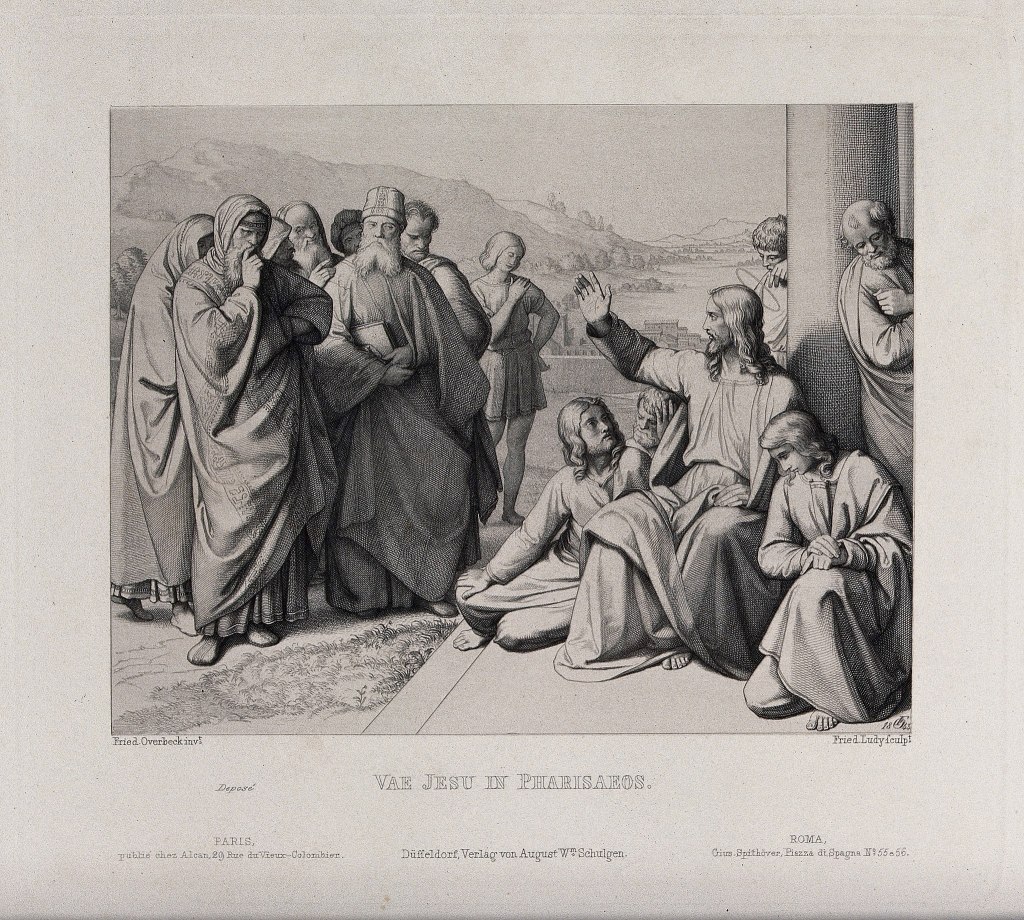
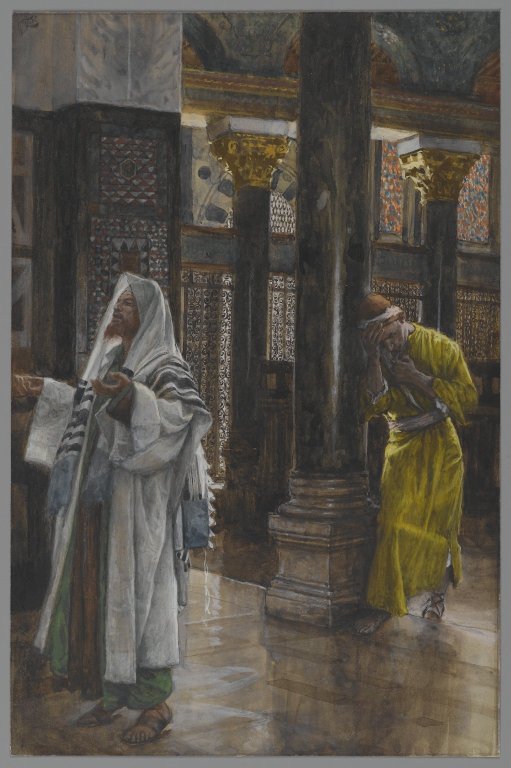
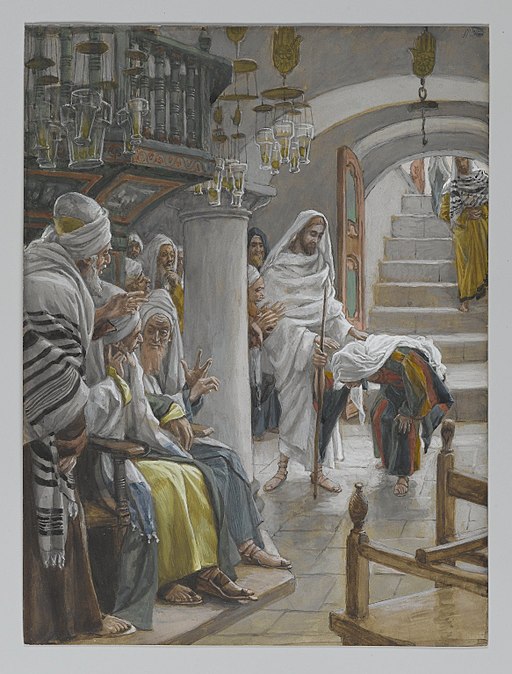


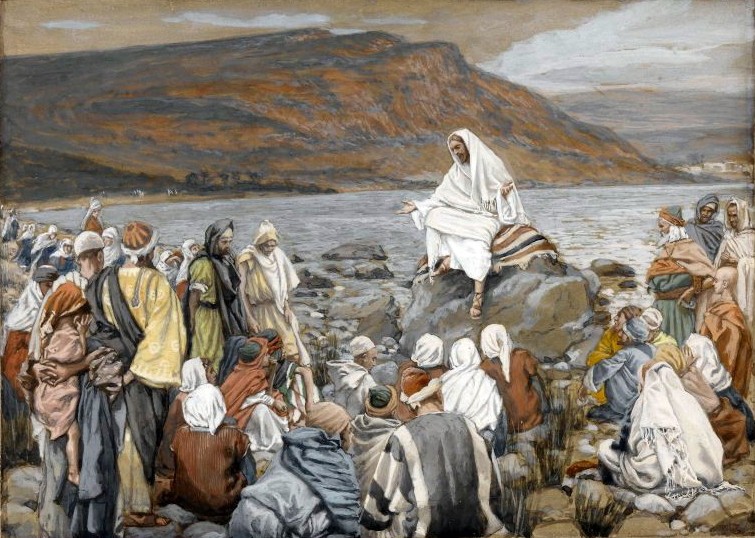
 Rev. Joan M. Kistler