On March 6th, we said good-bye to our home in Easton, PA, loaded up our rented Chrysler Pacifica, and began our journey south to Miami, from where we will fly out of the U.S. and into Costa Rica to start a new life. It was surreal. Nothing could have prepared us for the emotional moments of walking out our front door for the last time and saying “adiós” to family and friends and the city we loved.
The small part of me, that voice up in my head, keeps saying to me, “This is crazy. Who do you think you are moving to another country? How dare you!” We all have this small part that detests the unknown. Tabatha and I have boldly stepped into the unknown. We are on the road, making our way toward a new home in a new country – both of which we’ve only seen in pictures. Oh Lord, please don’t let it be run-down and cockroach-infested like our last hotel room.
The most challenging part about it all is trusting the people we hired. The small self has serious trust issues. Yet here we are trusting people we’ve never met face-to-face. This is challenging every trust molecule in my body. But we can’t make this move without their help, so we have no choice but to trust them to do their job.
I often consider myself an anxious person with trust issues, and I feel guilty for not trusting God enough. Maybe I have much less of an issue with trust than I give myself credit for because here I am going through this monumental move, despite what my small self has to say about it – despite how it feels. Maybe I really do trust God.
I was surprised that I didn’t feel sad or scared at all leaving it all behind. Instead, I felt deeply grateful. I found myself saying silently to it all, “Thanks for the wonderful memories.” I’m ending a wonderful old chapter of my life and starting another wonderful new chapter, perhaps even more wonderful than the last.
There is a bigger part of me that is thoroughly enjoying this adventure – loving every minute of letting go and anticipating what’s in store. This bigger part – who we really are – loves the unknown and the surprises that occur as life unfolds. When we identify with this part, we can relax and enjoy life instead of trying to control it, which is mission impossible – the perfect recipe for misery.
Everyone should do something boldly outside their comfort zone at least once in their life. I may feel a bit exhausted, but at the same time, I’ve honestly never felt so free and so alive.
Moving to Costa Rica … what a glorious dream! Warm weather, lush green scenery, toucans and monkeys, friendly people, and a slower pace of life. Before we made the decision to move to Costa Rica, life was mundanely simple: eat, sleep, work, play. After we made the decision to move to Costa Rica … mayhem!
It felt like we suddenly became the ring masters of a three-ring circus with the extreme stress of keeping all the wild animals at bay. In Ring #1 was the Logistics Lion, an unpredictable critter that clawed us on a couple of occasions. In Ring #2 was the Shipping Beast, staring us down hungrily. But they were tame compared to what was in Ring #3: the Residency Raptor, waiting patiently for an opportunity to pounce on us and eat us alive.
Alright, maybe I’m exaggerating (a little), but seriously … I’ve found the process of relocating to another country to be very stressful. I’m already an anxious kind of person, and this has triggered every anxious molecule in my body and tested just how much I really trust God. It’s difficult to relocate on one’s own, especially when you’ve never done anything remotely like it in your entire life. We hired help, but there were still many things we had to manage ourselves.
First was figuring out how to get rid of stuff. We had to decide what stuff we couldn’t live without, set it aside for packing, and get rid of the rest. I didn’t realize how much unused stuff we had until I had to figure out how to get rid of it. And you know what happens when you start sorting through things.
“Memories … light the corners of my mind … misty water-colored memories … of the way we were.”
It was an emotional rollercoaster ride. Some memories were happy ones, and some were sad, but I discovered something wonderful when sorting through it all: the fact that no one is going to know me in Costa Rica.
I can go there and be whoever I want to be, and no one will say, “Hey, you’ve changed, and I don’t like it.” The only one who knows me is my wife, and at our wedding, we vowed to “love each new version of one another.” So, she’s stuck with me.
That was a very pleasant discovery along with many other pleasures that came with the pain of getting rid of stuff. We stopped living in clutter. We realized that we could happily survive with far less stuff. But best of all, we made our neighbors very happy by selling stuff cheap on Facebook Marketplace.
We sold our portable dishwasher for $100, and the woman who came to our door to pick it up was absolutely ecstatic. She almost forgot to pay us in her zeal to get that thing out our door and into her kitchen ASAP.
We also posted lots of free stuff on Facebook’s “Buy Nothing,” and we got a card from a neighbor thanking us for our generosity. It’s true: “One man’s trash is another man’s treasure.”
Then there was selling the house. The day the house hit the market, we were bombarded with requests for showings. We could barely keep them all straight. One realtor showed up, and were still getting dressed. Another relator locked us out of our own house!
The parade in and out of our house was insane. We had 30 showings in four days. We couldn’t just get in the car and go somewhere because we had our dog, Jackson. We didn’t want to leave our poor little anxious boy in his crate all alone with groups of people coming in and going out. At one point during a showing, we were standing outside with the dog in the cold rain, and we all ended up piling into the car to get warm and dry off.
On the first day of showings, we accidentally ran into a lovely couple checking out our back yard. Actually, Jackson ran up to them, and we ran after Jackson. They said, “You have a lovely home.” We really liked them (so did Jackson apparently), and we said a little prayer that they would put in an offer.
We had nine offers. It turned out that theirs was the first and the best. We were overjoyed. We didn’t want to sell to any investors, who would make our home an exorbitant $2000 per month rental, contributing to the problem of unaffordable housing in this community (and everywhere). We wanted it to be a home for someone. We were proud to sell our home to this local interracial couple who wants to start a family here. God had answered our prayer.
There’s also finding a place to live in Costa Rica. It’s a truly unnerving feeling selling your house before you even know where you’re going to be living … in a foreign country no less! We had to trust our relocation specialist to find us a place.
After the first week, she said to us, “We’re having an unusually difficult time finding available rentals in your preferred location.” Our hearts sank (and skipped a couple beats). We started checking out other locations, but I said a little prayer asking God to help her find the perfect place for us in our preferred location.
Two days later, she found a rental in our chosen location that has everything we want for the most part. But there was an added bonus: It’s a tico-style home. The people who live in Costa Rica are called ticos, so we’re going to be living in true Costa-Rican style! We didn’t want to live in Costa Rica and feel like we were still living in the U.S. If we saw a Walmart in a neighborhood, we were like, “Oh no, we don’t want to live there!”
There are many Americans who move to Costa Rica and want all the comforts of their American lifestyle. Not us. We want to leave our American lifestyle behind in America, and when in Costa Rica, live like the Costa Ricans. God answered our prayers again!
And finally there’s getting residency. Oh my, what a complicated beast that is! There are a lot of documents to get together like birth certificates, marriage license, copies of passports, and FBI fingerprint checks. All documents have to be apostilled, and some documents needed to be notarized before being apostilled.
Do you know what an apostille is? I had no clue. It sounded like French to me. When I first heard the word, I imagined it to be the name of Napoleon Bonaparte’s war headquarters. The Apostille! But no, it’s how a state or country certifies the validity of its own documents for other countries. The process can take a while, and the documents can’t be older than six months when we apply for residency. So, timing is crucial.
The most unnerving part was entrusting our documents to our elected officials to get them apostilled. After all the time and energy and expense we went through to get the documents ready for apostille, I was very reluctant to hand them over. These days, I don’t have much confidence in any politician to get any job done any time soon. But I handed them over, and I prayed to God that they wouldn’t get ignored or lost or forgotten buried under a pile of papers on someone’s desk.
This week, we finally received all our apostilled documents back. God answered our prayers once again. God is still faithful – even to me of little faith. We are so grateful to have this opportunity to live in Costa Rica. Not everyone has this opportunity, but we do because of my wife’s pension. She didn’t make much money working for the government, but she enjoyed serving her community. A new life in a beautiful country is the reward for her service, and I get the pleasure of tagging along.
My wife and I have decided to sell our house, sell or give away most of the things we own, pack up the rest, and move to Costa Rica – and we’ve never even been there.
You might be thinking, “What? Are you nuts?” The practical mind has relentlessly asked us this same question. To address its concerns, we have several practical reasons for making Costa Rica our new home: a warmer climate, a lower cost of living, better health care, politically stable, very friendly people, and a high happiness and sustainability index.
Still, the mind argues, “But you’ve never been there!” Just because we’ve extensively researched, spoken to many people, and heard a lot of great things about Costa Rica doesn’t mean we’re going to like it there. True. We may not. But we feel we’re not going to figure that out from a vacation or two. We need to live there. Really experience the place. Become part of its culture and people. We need to risk a serious commitment, and we’ve learned enough about this country to feel it’s worth the risk.
To live life to the fullest, we must be willing to take risks, trusting in God. We’ve been somewhat happy living here in the United States. The same is true with our home here in PA. But we want to experience and embrace a different culture – a culture more laid-back and peace-loving, a culture more concerned about having good relationships with other human beings and with the Earth.
Now more than ever, we need to be willing to open ourselves up to experiencing other cultures. That’s the only way to begin to understand people who are different from us. By understanding their traditions and struggles, we can begin to view them as human beings just like us. This challenges the “us versus them” mentality plaguing humanity, keeping us in conflict with one another.
We also can begin to challenge the assumptions we live by. There are other choices around how we can choose to live our lives, but we might not see them because we have been so conditioned by our culture.
The small self keeps telling me, “This isn’t who you are. You’re a home-body. You’ve never even left the country except to go to Niagara Falls, and that doesn’t even count.” Indeed. Oftentimes, I look at our boxes ready to be shipped and hear the increased echoing of our house as it is emptied of all our stuff, and I think, “I can’t believe we’re doing this.”
While the small self is busy questioning and protesting, the True Self within me feels so peaceful and so excited for this grand adventure on which we are about to embark. That’s the part that has given us a sign encouraging us to go after this dream without fear.
The sign is the sloth. The sloth is the national symbol of Costa Rica, like the Eagle for America. In June, my wife picked a birthday card for me with a sloth on it. We didn’t learn that the sloth was Costa Rica’s national symbol until the following month when we were researching Costa Rica. Over the weekend, we were shopping in Boscov’s for a suitcase. We picked one that was perfect for us, and it was even on sale. We didn’t notice until we were in the checkout line that the suitcase had toucans on it and … guess what else? Yes, sloths!
Sometimes when we think we’re happy, we have no idea how much more happy we can be until God moves us out of our familiar places where our lives have become stale, and we’re no longer growing. We’re never stuck – except by our own fears. We have our fears, but we have more trust that God has something grand in store for us.
I invite you, my dear readers, to join us on this grand adventure. Stay tuned for future posts!
Synopsis: Just as in Paul’s day, many Christians today are trying to keep Christ for themselves by distorting the gospel. How can we remain free in Christ when heretics claim that we must first be like them and follow their made-up rules?
In Jesus’ time, there was a great deal of concern about political freedom. Living under the heavy yoke of Rome, the Jews had very little ability to influence laws and policies or to advocate for themselves. They were just pushed around like pawns on a chess board by those in power. Some of us might be feeling a similar sense of powerlessness with the current political climate in our country.
Political freedom is important, but there is something far more powerful than political freedom, and that is the kind of freedom Jesus was concerned about. Jesus came into this world because he wanted everyone to reclaim their spiritual freedom in Christ.
Yet, as the Christian church grew, Paul was constantly dealing with people attempting to nullify the gospel. How can we remain free in Christ when people keep messing with the gospel? That is what today’s scripture reading is all about.
Our scripture reading for today comes from the epistle of Colossians. Paul and his coworker Timothy wrote this letter to the church at Colossae. This small city was located about 15 miles east of the Denizli province in modern-day Turkey. Paul had never been to Colossae, but he had received reports from Epaphras, a missionary who probably founded the church there.
Epaphras reports some problems with false teachings that scholars have named the “Colossian Heresy.” Where the heresy came from is debatable. Some scholars believe it originated from Greek philosophy; other scholars believe its source was Jewish philosophy.
The Colossian Heresy undermined the gospel – the Truth that we are saved through faith in Christ alone. There were several components of this heresy, and Paul deals with each of them in turn. But first, he grounds the Colossians in the True faith.
As we learned from Paul’s letter to the Galatians, the Torah was a temporary covenant given to Moses in order to constrain the Israelites and to make them aware of their need for salvation until the time that perfect salvation was accomplished through the work of Jesus Christ. To receive the Christ is to receive perfect salvation. Once we receive the Christ, we no longer identify with the flesh; we identify with the Spirit. We become a new creation – a son or daughter of God.
Paul uses the words “rooted” and “built up.” When we are rooted in Christ, our spiritual resources are literally infinite. When we are built up in Christ, we have a sturdy foundation. As the offspring of the Creator of All That Is, we have an equally indestructible essence. Whether times are good or bad, we can always draw upon the Christ for nourishment and support. There is nothing more we need.
Paul advises the Colossians to hold fast to what they were taught. What we believe matters because we perceive life through the lens of what we believe. Jesus said in John 8:32 that “the truth will make you free.” The opposite is also true.
Lies rob us of our freedom because they cause us to perceive ourselves, others, and the world through a distorted lens. Under those circumstances, our vision is limited. We can’t see clearly, so we respond to life in ways that hurt us, other human beings, and all of life.
Paul reassures the Colossians that they can be thankful that they are rooted and built up in Christ through proper instruction. As long as they hold fast to what they have been taught, nothing can rob them of their freedom in Christ.
Paul then attacks the heretical beliefs that are threatening to rob them. Some fellow Christians were teaching that the Godhead does not dwell fully in the Christ; therefore, human beings cannot approach God through faith in Christ alone. They must use certain props to “elevate” themselves spiritually.
This reminds me of a husband-and-wife team in Easton who dress up in costumes and walk around on stilts for the city’s festivals. Now, plenty of people approach them to talk to them and to get some pictures with them apparently without feeling the need to first find themselves a pair of stilts.
Why don’t they feel the need to “elevate” themselves in order to approach these two? Well, because they know that the stilts create an illusion. These two are not superhumans; they are ordinary humans. Anyone who would go through all the trouble to find themselves a pair of stilts and to put them on before feeling “worthy enough” to approach these two would probably be viewed as insane.
And so it is with God and the Christ. They are essentially the same. When we have joined with Christ, we do not need any “stilts” to approach God. To think we need them is not humility. It’s ignorance.
Returning to our reading, some heretical Christians were claiming that in order to approach God, people needed to elevate themselves spiritually through observing several practices. One practice was circumcision. Another was the observance of certain ceremonial laws pertaining to what they could eat and drink as well as the observance of the sabbath and certain festivals.
Sound familiar? Many Jewish Christians believed that gentile Christians had to become Jews like them in order to approach Christ, so I think it’s obvious that these ideas originated with the Judaizers.
This was similar to the legalism imposed by the Pharisees in Jesus’ time. It wasn’t enough for them that the Jews were already required to follow 613 Torah laws. In Mark chapter 7, the Pharisees criticized Jesus’ disciples for not performing the proper hand-washing ritual before eating bread. This ritual was nothing more than a Pharisaic tradition. It was not part of Torah law.
Jesus criticized the Pharisees for requiring such burdensome traditions like this one and treating violations of them as if they were violations of Torah. He also exposes their hypocrisy and wickedness for breaking God’s laws in favor of their own “Traditions of the Elders.”
Returning to our reading, a third way these heretics claimed people needed to spiritually elevate themselves was through the worship of angels. They taught that Christians should not arrogantly assume that they can reach God directly or even through the mediation of Christ. They needed to humble themselves by reaching lower on the totem pole.
This is a misunderstanding of who angels are in relation to us. It’s inappropriate to worship the angels. God created angels to serve us, not the other way around, and we are supposed to worship only God.
It’s appropriate to ask the angels for help. They respect our free will, so they won’t become involved in our lives unless we ask. So don’t hesitate to ask. They are powerful beings. It’s also appropriate to love and respect the angels for their dutiful service to us. They will do anything for us as long as it doesn’t interfere with God’s Will.
Finally, these heretics claimed that people needed to spiritually elevate themselves by practicing a form of asceticism including severe self-discipline and avoidance of all forms of indulgence. This is the idea that the body is evil and that only the soul needs to be preserved. But without the body, God would not be able to express His Love in this world. The body is God’s Temple, so we should take good care of it. Certainly, that requires some level of self-discipline and avoiding self-indulgence, but nothing extreme.
Both of these ideas originated with the Essenes, a mystical Jewish sect that existed in Jesus’ time. Essene thought influenced the Gnostic Christian philosophy that was developing among Christians around this time. So, I believe that the most likely source of the Colossian Heresy was Jewish philosophy.
How can we apply this lesson in our world today? Are there any ways in which we are we being robbed of our spiritual freedom in Christ?
Imagine yourself as pure energy floating safely in unlimited space. Within this space, you can be, do, and have anything you want. You decide that you want to experience being human, so you are born into this world. You are immediately assigned a gender, and you begin learning who you can and can’t be, what you can and can’t do, and what you can and can’t have based on your gender.
That unlimited space suddenly becomes a box. You also inherit a race, and you begin learning who you can and can’t be, what you can and can’t do, and what you can and can’t have based on your race. Now, you’re inside a smaller box within your gender box.
You also inherit a socioeconomic status, and you begin learning who you can and can’t be, what you can and can’t do, and what you can and can’t have based on your socioeconomic status. And now, you’re inside an even smaller box within the race box.
Over time, you adopt many more identities, with each one forcing you into smaller and smaller boxes until the unlimited freedom to be, do, and have whatever you want is gone, and after some time, you have forgotten you ever had that kind of freedom.
At that point, the very thought of losing these identities becomes extremely frightening because you think that you will cease to exist without them, and so you do everything you can to protect these identities without realizing that what you’re really doing is fortifying the walls of your own prison.
What I have just described is the development of the mind of me and how it becomes prominent over time, pushing the Mind of Christ further and further into the background.
Now, it’s all part of the game. We need the experience of individuality to function in this world, and we use identities and roles to structure human life. They are the costumes we wear in this play called Life. But when we start to believe that we are these costumes and nothing more, we begin defending them tooth-and-nail, and life becomes very painful for everyone.
Anyone who behaves in ways that do not conform to them becomes an extreme threat because they are making it clear that they are not-so-solid – that they are nothing more than illusions. These brave souls are treated as if they are public enemy #1 when the truth is that they are the ones who are taking a sledgehammer to our prison walls.
Yet those who are trapped inside tiny prisons vehemently criticize everything that these truly Christ-like men and women are doing to set us free while giving carte blanche to men and women who engage in mind-blowing levels of corruption designed to keep us all in prison.
Because you see, when someone doesn’t accept the Gospel of Jesus Christ, they have no other choice for an identity, and so they feel they need to prove their worth and entitlements based on these things rather than simply on their status as sons and daughters of God.
That is why the Pharisees created the “traditions of the elders.” They created these burdensome traditions so that Jews could be more distinguishable from non-Jews. They didn’t want to make the unthinkable mistake of treating a non-Jew as an equal. They were attempting to fortify their religious and cultural walls, and Jesus was taking a sledgehammer to them.
The Judaizers in the early Christian church were attempting to do the same thing. They wanted keep Christ for themselves, and there are many Christians today who are attempting to do the same. They make up their own rules and treat violations of them as if they are violations of Scripture.
They may call themselves Christians, but they have not accepted the true Gospel. When we accept true Gospel, we become aware of our true spiritual nature, our essential unity with All That Is. We became aware that, as Paul writes in Galatians 3:28, “There is neither Jew nor Greek, there is neither slave nor free, there is neither male nor female; for you are all one in Christ Jesus.”
We realize that our personal characteristics like our gender, race, religion, and socioeconomic status are all part of the illusory personal self – costumes that will be shed when we leave this world.
In John chapter 13, Jesus washes his disciples’ feet. Peter objects saying, “You shall never wash my feet.” He said this because in his culture, teachers didn’t wash their students’ feet. It was the other way around. But Jesus replied, “If I do not wash you, you have no part in me.”
Jesus taught us here that in order to join with Christ, we must be willing to let these roles go. The biggest reason why we feel unable to be, do, or have whatever we want isn’t so much due to external forces; it’s more due to internal forces, and the biggest internal force is that we don’t feel we deserve it.
Just like Peter, we believe we are unworthy. And we believe that because we identify more with these roles instead of with the Christ, and we try to follow the gazillion human-made rules that go with these roles instead of with the Christ’s one rule, and that rule is “Love one another.”
Indeed, there are countless cultural and religious rules designed to keep us within the boundaries of our identities and roles. But listen to what Paul writes about the Lord: “having canceled the bond which stood against us with its legal demands; this he set aside, nailing it to the cross. He disarmed the principalities and powers and made a public example of them, triumphing over them in him.”
He canceled the bonds. We are free in Christ. The powers that be have no real power over us. As One with Christ, we are still floating safely in unlimited space. We still have the freedom to be, do, and have anything we want. There is no one on the spiritual level judging us.
Of course, on the worldly level, there are plenty of judges. But if you’re a guy, you’re free in Christ to wear pink. If you’re a woman, you’re free in Christ to be a firefighter. If you’re poor, you’re free in Christ to go to college. And regardless of your race, ethnicity, religion, or sexual orientation, you’re free in Christ to have a lucrative career and to own nice things and to enjoy your life as much as everyone else. Because the Truth is that, as far as God is concerned, no one is more entitled than another to the gifts of His Creation. No one!
We can choose to experience whatever we desire because God gave us free will. He gave us free will so that we could freely learn from our experiences – both the good and the bad. We are Life learning how to master Life. Life in the process of self-mastery.
If we make a not-so-good decision, God set this world up in a way that we will eventually learn from our mistake. It’s called Karma. Karma is a teacher, not a judge. So, we are free in Christ to break the law, but we might end up in prison – literally – like behind bars.
But if through that experience we learn some good lessons about life, then there’s nothing to be ashamed of because that’s what life is all about! Our soul knows exactly what we need to learn and how we can best learn it, and sometimes, it picks the School of Hard Knocks.
That is true on both a personal and collective level.
Paul tells the Colossians not to let anyone judge them, and he’s telling us today the same thing. We are One body in Christ growing in the way God wants us to grow. So let us let go of the modern legalism that binds us, keeping us separate from one another and our True Nature, for it was from these bonds that Jesus Christ came to set us free.
Let’s pray together: Lord, we accept the wonderful truth that our Father loves all his sons and daughters equally. Through the power of Your Holy Spirit, help us to let go of any identities or roles that make us feel unworthy or entitled so that we can be truly free in Christ. AMEN.
Attributed to Valentin de Boulogne, Public domain, via Wikimedia Commons
Synopsis: Using the law for the wrong purpose is hazardous to our spiritual health because it nullifies the gospel. Just as the “Judaizers” of Paul’s day required people to follow Torah law before coming to Christ, many Christians undermine both faith and grace by requiring works of those who wish to come to Christ.
Scripture reading: Galatians 3: 23-29.
How many of you have ever used something for a purpose other than for that which it was intended? Like using a fork to clean your teeth instead of a toothpick? Or using a knife to open a can instead of a can opener? And how many of you got hurt as a result?
Often, using things for other than their intended purpose can be hazardous to our health. There is a word for using things in ways they were not intended to be used. The word is “abuse.” In our scripture reading for today, Paul discusses the abuse of the law, and how it is hazardous to our spiritual health.
The term “Judaizers” refers to the Jewish Christians who taught that salvation was a mixture of grace through the work of Jesus Christ and human effort through obeying Torah. They believed Gentiles had to become Jewish like them before they could come to Christ. Paul first deals with this false doctrine in Acts chapter 15 when some Judaizers opposed him and Barnabas at the Jerusalem Council, and he strongly condemns it in his letter to the Galatians.
In Galatians 2:21, Paul writes, “I do not nullify the grace of God; for if justification were through the law, then Christ died to no purpose.” In a nutshell, Paul is stating that anyone who claims salvation isn’t by faith alone is declaring the Lord’s work pointless and God’s grace invalid.
This reminds me of a sad story Tabatha told me about something that happened in her childhood. She gave her old bike to a good friend as a gift. When Tabatha’s mother found out about it, she marched over to her friend’s house and demanded payment for the bike. This alienated her friend, destroyed their friendship, and broke Tabatha’s heart.
I can imagine that is how God feels.
Let’s take a look at the context around our passage. In the first half of chapter 3, Paul explains to the Galatians that Mosaic law could not pronounce a blessing, only a curse, because the law must be followed perfectly, which is something we humans can’t do.
He reminds them that Abraham was justified (or declared righteous) on the basis of his faith, not his works, and it was because of his righteousness that God made a covenant with him recorded in Genesis 12:1-3. In that covenant, God promised Abraham a land, many descendants, and that the entire world would be blessed through him.
Paul reminds his readers that the Mosaic covenant was given through Moses, but God gave the Abrahamic Covenant directly to Abraham 430 years earlier. Therefore, Mosaic law did not replace God’s covenant with Abraham. So then, what was the purpose of Mosaic Law? Why did God add this covenant to his original covenant with Abraham?
And that takes us to our scripture reading for today. Paul explains that we were confined under the law. It kept us under restraint. It was our custodian until Christ came that we may be justified by faith. A custodian is a guardian or protector, but how can it be when Paul also says it’s a curse?
Well, think about how we all feel about rules – especially while growing up. We curse them, but our parents put them in place to guide and protect us. The rules confined us for our own good until we were wise enough to follow them willingly. Until then, we didn’t follow them perfectly, did we? No, we probably tested those rules quite a bit.
I’m reminded of an event that took place while the Israelites were wandering in the wilderness. In Numbers chapter 21, we read that the Israelites were being bitten by snakes. They believed God sent the snakes because they spoke out against Him and Moses saying, “Why have you brought us up out of Egypt to die in the desert? There is no bread! There is no water! And we detest this miserable food!”
Many Israelites were dying from the snake bites, so God told Moses to create a bronze snake so that anyone who is bitten could look at it and live. Imagine if you were dying from a snake bite, and someone tells you to look at a bronze snake on a pole to be healed. You might think it’s a cruel joke. Some of the Israelites might have thought that too, but to look at it was an act of faith, not works.
Israelites who were bitten by a snake knew they were bitten. They also knew they were dying, so they actively sought healing because they didn’t want to die. That’s how it is when we know there’s something physically wrong with us. We have ways of knowing, such as symptoms and medical technology like x-rays and scans. Once our illness is confirmed, we then seek healing.
When someone is suffering from mental illness, it’s more difficult to identify. There aren’t any physical symptoms or medical technologies to make it obvious. A person is diagnosed with mental illness when their thoughts, feelings, and behaviors are out of the range of “normal.” But what is “normal?” We have a book called the “The Diagnostic and Statistical Manual of Mental Disorders” to define what’s “normal.”
When someone is spiritually ill, how can that be identified – especially when most people are spiritually ill – more or less? When most people are walking around spiritually ill, and very few are spiritually healthy, the ill ones point at the healthy ones and say, “Something’s wrong with them.”
Many people have been bitten and poisoned by the “snake,” the Mind of Me, but if they don’t know it, they won’t seek healing. If we don’t think we need something, we won’t accept it – even if it’s free. If you say to me, “Here’s a free toaster oven.” I’d say, “No thanks, I don’t need one, but maybe someone else could use it.”
So … Mosaic law is like “The Diagnostic and Statistical Manual of Spiritual Disorders.” It reveals what we can’t do when we’ve been bitten by the snake, and its poison is causing spiritual illness within us. This way, we can be made aware of our need for healing and then actively seek it out.
The less we understand about a form of illness, the more likely we are to judge and condemn those who suffer from it. We understand the body the most, so we have a lot of compassion for people who have illnesses like cancer. We understand the mind much less, so there has been a lot of stigma around mental illness, but thankfully, that is changing.
We understand the least about the spirit, so we judge and condemn people. But, judging and condemning others is just another symptom of a spiritual disorder. In Matthew 7, the Lord said, “Do not judge, so that you may not be judged. For the judgment you give will be the judgment you get, and the measure you give will be the measure you get.”
If we’re measuring others’ righteousness using the law, then we must also be measuring our own. God did not give us the law for that purpose. We don’t expect those suffering from mental illness to read the manual, identify their abnormal thoughts, feelings, and behaviors, and then say, “OK – I’ll stop doing those things.” We know they can’t do that because they are suffering from mental illness.
That’s the point of the book! We understand that the manual is a diagnostic tool, not the cure. The same is true of Mosaic law, but all those who require works for salvation are trying to make the law the cure.
The cure for spiritual illness was accomplished through God’s own Son being lifted up on the cross so that all who would look upon Him in FAITH would be healed. This is how God made good on his third promise to Abraham – that all the world would be blessed through him.
This is the “new covenant” that the prophet Jeremiah foretells in chapter 31: 33-34 where we read, “But this is the covenant which I will make with the house of Israel after those days [of Moses], says the Lord: I will put my law within them, and I will write it upon their hearts; and I will be their God, and they shall be my people. And no longer shall each man teach his neighbor and each his brother, saying, ‘Know the Lord,’ for they shall all know me, from the least of them to the greatest, says the Lord; for I will forgive their iniquity, and I will remember their sin no more.”
Jesus, at the last supper, suggested that his work fulfilled God’s promise of a new covenant. In Luke 20:20, we read, “And likewise [he took] the cup after supper, saying, “This cup which is poured out for you is the new covenant in my blood.” Through Jesus – both a son of Abraham and the Son of God – the entire world has been healed.
The law is no longer needed once we have been spiritually healed by looking to the Lord with faith. Once we know who we are, we no longer need the custodian of the law. We no longer need it because through the Holy Spirit, the law is within us, written on our hearts, and soon, my friends, we will live in a world where all shall know the Lord, from the least to the greatest.
How can we apply Paul’s message to the Galatians today? Well, we must acknowledge that free means free. We are saved by faith in Christ alone through God’s grace. Salvation is simply having faith in the Truth that God has only one child whom He loves dearly. That Child is the Christ, and we are all part of Him. There is nothing we can do to change that.
God can’t have any favorites because he has only one child. Those who believe that God loves them more than another clearly don’t know who they are.
Some modern Christian churches explicitly deny the idea of salvation by faith alone. The Hebrew Roots Movement holds beliefs that are identical to those of the Judaizers of Paul’s day, and some churches believe certain sacraments, such as baptism, are required for salvation. Other churches implicitly deny the idea of salvation by faith alone by requiring adherents to follow their rules and traditions.
Why do people nullify the gospel? Because there is something within us that doesn’t know the meaning of free. It believes that everything must be earned, particularly our worth and the right to live. It doesn’t like freedom either. It likes control. And it really hates equality because it loves superiority.
The Gospel of Jesus Christ is a direct assault on the Mind of Me, so it created a false gospel. Simply by adding works, it effectively undermines faith. It discourages people from discovering their True Nature by keeping them too busy following rules and traditions that don’t change their hearts.
It also effectively undermines grace, making salvation no longer so easy because it’s no longer free. The Mind of Me can now control people because it gets to decide what is required to earn salvation. It can choose whatever beliefs and deeds it favors, particularly those that manipulate people into giving it what it wants. To sell its requirements, it promotes and practices them in public, but what it does in private is a different story.
Jesus had a serious problem with people who abused Mosaic Law. He called them “hypocrites.” In Matthew chapter 23:4, Jesus says, “They bind heavy burdens, hard to bear, and lay them on men’s shoulders; but they themselves will not move them with their finger.” And in verse 23, “… Woe to you, scribes and Pharisees, hypocrites! because you shut the kingdom of heaven against men; for you neither enter yourselves, nor allow those who would enter to go in.”
This abuse has certainly affected the Christian church. Richard Rohr, an American Franciscan priest and writer on spirituality, summed it up quite nicely saying, “We worshipped Jesus instead of following him on his same path. We made Jesus into a mere religion instead of a journey toward unison with God and everything else. This shift made us into a religion of ‘belonging and believing’ instead of a religion of transformation.”
Thanks be to God that we know all about the Mind of Me, so we don’t fall for its tricks. Free means free. That is what we need to communicate to people. Because like Tabatha’s friend, many of God’s own children have been alienated from Him because others have demanded payment for His Gift.
God wants nothing from us because God needs nothing from us. I mean, what could Almighty God, who created the heavens and the earth, who is quite literally All There Is, possibly need from us? God wants nothing from us, but he does want something for us. He wants for us to have an abundant life free from suffering, and to have that, all WE need is FAITH in who we are.
It is not until we can fully accept who we are that we can accept salvation as a gift given freely by our loving Father. He gave us this gift not to make us feel obligated but so that we can enjoy the peace, love, and joy that is our inheritance.
Isn’t our Heavenly Father wonderful? What can we do in response to such magnanimous love? We can say, “Thank you, Father!” We can be grateful, but God doesn’t need gratitude from us. Gratitude is another thing for us. Faith opens the door of our heart to receive God’s greatest gift, and gratitude keeps that door open so that we can receive more gifts. Our Heavenly Father is a doting father; it is His greatest joy to shower us with gifts.
We can also love God in return. We can love God where God can be found – within that Spark you see glowing out of the eyes of others. In the flesh, there are differences, certainly. We, however, are able to acknowledge and respect differences without attaching them to worthiness before Our God because we know that when it comes to our essential nature, we are One in Christ.
So let us be God’s ambassadors, bringing all those estranged from Him back into a relationship with Him. Let us tell everyone the truth that they are beloved of God no matter who they are or what they have done and that they need only to look to the Christ in faith to be healed. No payment required.
In this way, we give God the Father’s Day gift he’s always wanted.
Let’s pray together: Lord, we are grateful to you for teaching us the proper use of the law. Give us the courage to lead others to You, to unity with the Father and All That Is, and to love them as you love us. AMEN.
Jean II Restout, Public domain, via Wikimedia Commons
Synopsis:The choice between life in the Spirit and life in the flesh is not one to be taken lightly. It’s a choice between having a life of peace and joy and not having a lifeat all due to the suffering caused by self-indulgence and self-righteousness. Do we choose a life of peace and joy or one of suffering and misery?
Our statement of faith begins, “We are not alone; we live with God in our hearts.” We say it, but we might also wonder, “What does it really mean, and how do we demonstrate this faith in our daily lives?”
Our scripture reading for today from Paul’s letter to the Romans is part of a chapter that is considered the most systematic treatment of the doctrine of the spiritual life in the entire New Testament. I believe it is here that we can find the answer. But first let’s back up a couple of chapters for some context.
In chapter six, Paul writes about libertine faith. This is the kind of faith Christians who don’t want to change have. They talk about grace, but they don’t strive for righteousness. Paul rejects this type of faith, explaining that if we are alive in Christ, then we are dead to sin. I believe that means the more we identify with the Spirit instead of the flesh, the more we will experience freedom from sin and the suffering it causes.
Both Jewish and gentile Christians suffered from this type of faith. They basically said, “Hot dog! I’m saved by grace, so I can do whatever I want!” Surprisingly, the Jewish Christians were in some ways worse than the gentile Christians. In his first letter to the Corinthians 5:1-8, Paul scolds the Jewish Christians for engaging in a form of sexual immorality that not even the pagans would tolerate.
There are many Christians today who suffer from this type of faith. They believe they are saved because they claim faith in Christ, but they are not experiencing their salvation. They are still enslaved by the Mind of Me. They are still suffering from their addictions to pleasures and treasures – still striving for these “status symbols” that they think make them worthy.
In chapter seven, Paul writes about legalist faith. This type of faith is the opposite of libertine faith. People with this type of faith want to bury themselves and others in rules. Many of the Pharisees of Jesus’ time had this kind of faith. Paul rejects this faith also, explaining that anyone who tries to follow the law without a change of heart is bound to fail. And the attempt itself is a sin because of the reliance on one’s own power instead of God’s.
There are many Christians today who suffer from this type of faith also. They belong to sects that are very strict, lots of rules and regulations. Devotees have no choice but to follow them if they don’t want to be expelled. But Jesus didn’t say, “Come to me, all you who are weak and heavy laden, and I will place even more burdens on you until your spirit is totally crushed because I am hard and arrogant in heart.”
No, he said in Matthew 11: 28-30, “Come to me, all you who are weary and are carrying heavy burdens, and I will give you rest. Take my yoke upon you, and learn from me, for I am gentle and humble in heart, and you will find rest for your souls. For my yoke is easy, and my burden is light.”
When we have true faith in Christ, we know that we are worthy by virtue of who we are, not what we do. We are God’s children. We can’t earn our inheritance any more than a child can earn his or her parents’ inheritance. It is ours simply by virtue of being a son or daughter. It is freely given in love. How insolent would it be for us to say, “No thanks dad. I don’t want your gift. I’d rather earn it myself.”
Yet that is exactly what those with a legalist faith are saying to God. Paul, a very devout Pharisee, suffered from a legalist faith. He writes about his struggle in verses 21-25: “So I find this law at work: Although I want to do good, evil is right there with me. For in my inner being I delight in God’s law; but I see another law at work in me, waging war against the law of my mind and making me a prisoner of the law of sin at work within me. What a wretched man I am!”
Both the libertine and legalist types of faith do not work. Both are self-deceptions that keep us slaves to sin. Many of the people in the Roman church might have felt the same frustration Paul expressed. But then Paul ends the chapter with the solution: “Who will rescue me from this body that is subject to death? Thanks be to God, who delivers me through Jesus Christ our Lord!”
Chapter 8, in which our scripture reading lies, begins with Paul explaining the nature of God’s provision for our deliverance. We can escape the suffering sin causes and live in a way that fulfills the law of God because we are not alone. God is with us. And more than being beside us, God is actually within us as the Christ – His Perfect Image. We are saved through his power alone. But how?
Paul explains in verses 2-4 that the law of the Spirit of Life in Christ Jesus has set us free from the law of sin and death by sending his son in the flesh to deal with and condemn sin so that God’s law could be fulfilled in us. What does that mean? Well, I don’t believe it means God sent His Son to pay for our sins. I do believe it means that God had to send His Son in the flesh because the problem existed in the flesh.
Here is an analogy to think about. In science, a complete circuit is an uninterrupted path for electrons to flow from an energy source, through a device, and back to its source. If that path is broken, then the flow of electrons stops, and the device can no longer receive power.
Often, the path is broken through a short circuit. What’s a short circuit? Well, energy likes to follow along a path of least resistance. When it finds a shorter path to follow, it will follow that one instead of the intended one, causing all connected devices to stop receiving power. To fix a short circuit, the damaged wire needs to be identified, cut out, and replaced with a new wire.
We are the Circuit of Life, and this body/mind is a device. The development of the Mind of Me caused a short circuit. Our energy began flowing in another direction – along the path of least resistance. God sent His Son, a master electrician, to deal with it. Taking on the flesh, he identified the Mind of Me as the faulty wire. Then he willingly and lovingly removed it with his crucifixion and replaced it with his resurrection. We now have the Power of God, the Holy Spirit, flowing through us once again.
It is only when we are connected to God’s power that we are able to function properly and fulfill God’s law. If we are short-circuited, we just can’t do it. We have free will, so God allowed the path of least resistance to remain so that we have a choice. So … do we choose to be a fully-powered, functioning part of the circuitry of Life – or to be defunct?
Imagine that you need to go on a long road trip, and you have a choice between two drivers. The first one is an expert driver. He knows exactly the path you need to follow to get you to your destination as painlessly and efficiently as possible. And all along the way, he’ll give you very wise advice, keep you on the right track, and comfort and reassure you that all will be well.
The second one has no idea how to drive; he only pretends to know. And he has no clue where you’re going; he only pretends to know. And all along the way, he’ll give you crappy advice, get distracted by all kinds of “shiny things,” leave you lost in some awful places, and fill you with fear and dread. But it won’t be his fault. He’ll consistently blame either you or others for the mess you’re in.
The choice between these two drivers is the choice between life in the Spirit and life in the flesh. So which driver would you choose for that long road trip? Seems like a no brainer, right? Yet most people pick the totally incompetent one.
All you have to do is look out into the world today to see evidence of that. In Luke 13: 23-24, we read, “Someone asked him, ‘Lord, will only a few be saved?’ He said to them, ‘Strive to enter through the narrow door, for many, I tell you, will try to enter and will not be able.’”
Those who try to enter but are not able are the people who think they are saved but can’t figure out why their life is still a mess. It’s a mess because their driver is not the Lord, and that’s why the Lord doesn’t know them.
Those who live according to the flesh suffer from an insatiable striving for pleasures and treasures. Do not envy people who go on exotic vacations or eat fancy meals or buy expensive things. They will never be satisfied no matter how many exotic vacations, fancy meals, or expensive things they buy.
That’s because how much they are “worth” by society’s definition doesn’t make them truly worthy. Deep in their souls, they know this, but they can’t stop listening to their incompetent driver, who says, “Check out this shiny thing. Buy this one, and I promise you’ll feel better.”
Those who live according to the flesh also suffer from an insatiable desire to be better than everyone else. Do not envy people who claim to be better than everyone else because they live according to “God’s Word.”
They inwardly place on themselves the same demands they place on others – heavy burdens that they themselves will never be able to live up to. Deep in their souls, they know it, but they can’t stop listening to their incompetent driver, who says, “Check out that sinner. Judge her, and I promise you’ll feel better.”
Do not envy these libertines and legalists because they are dying inside. They are experiencing painful alienation from God. Their souls are shackled and languishing in the Mind of Me’s prison, causing them to have a very twisted view God, themselves, the world, and life in general.
As Paul writes in verses 12-13, “So then, brothers and sisters, we are obligated, not to the flesh, to live according to the flesh – for if you live according to the flesh, you will die, but if by the Spirit you put to death the deeds of the body, you will live.”
I love that Paul uses the word “obligated.” So many people choose that incompetent driver because they feel obligated. They believe that incompetent driver is providing them with some kind of valuable service. Think of it this way: If you’ve ever traveled overseas, and your car is stopped at a stop light, someone may very well wash your windshield for you. And you will feel obligated to pay for that service.
But did you really need your windshield washed? Probably not, but opened your wallet or purse and paid for it anyway because you were tricked into feeling obligated. And that is the plain truth when it comes to any feelings of obligation we might have for the “service” the incompetent driver provides – service that is not only unnecessary but also truly stinks.
If we should feel obligated to anyone, we should feel obligated to the Lord who truly and lovingly served us. Yet, the Lord doesn’t trick us into feeling obligated (some churches do that), but the Lord gives us a choice. We can choose not to live by the Spirit, but if we make that choice, we won’t have a life. The Lord loves us so much that he did all he did so that we could have not just a life, but an abundant life.
As the Lord told his disciples in Matthew 16:24-26, “If any wish to come after me, let them deny themselves and take up their cross and follow me. For those who want to save their life will lose it, and those who lose their life for my sake will find it. For what will it profit them if they gain the whole world but forfeit their life? Or what will they give in return for their life?”
Thanks be to God that we have made a different choice. We have true faith in Christ, which is our only hope of release from slavery to sin. We know that we are worthy by virtue of who we are, not what we have or what we do. Once we know that we can’t un-know it, so we can’t go back self-indulgence or self-righteousness. That is why there is no condemnation.
We can consider ourselves Sons of God because by our choice to be led by the Spirit, we join with the Christ. We cry “Abba, Father!” because we acknowledge who we are. We gratefully receive the gift of the Holy Spirit, knowing that it is only though this gift, our Father’s gracious gift, that we can escape the slavery and death of the Mind of Me and truly live.
So, what does it mean to truly believe that we live with God in our hearts? Well, it doesn’t mean we’ll be perfect; it simply means that we are truly striving for righteousness. We are extremely wary of self-indulgence and self-righteousness because we know it’s a trap. We may briefly follow the path of least resistance – it’s only natural – but the suffering on that path returns us to our senses rather quickly.
We may engage in a little self-indulgence from time-to-time, but we don’t use pleasures and treasures as a yardstick of our worth. We use God’s judgment of our worth, and He said, “This is my Son, whom I love, with him I am well pleased.” We have nothing to prove.
And because we know we have nothing to prove, self-righteousness is almost non-existent in us Sons of God. Only people who believe they have something to prove are self-righteous, and if we ever think we have something to prove, then it’s a sure sign that we have forgotten who we are.
Many self-righteous people will judge us, and the Mind of Me will tempt you to judge them in return. But doing that only makes the Mind of Me feel better. Trust me, very soon after it persuades you to judge someone, it will turn around and judge you for being so judgmental. Yes. it gets a double-high at your expense. It’s not worth it!
We must be willing to let the Mind of Me suffer from our refusal to do its bidding because the more we let it suffer, the more it loses its power over us. It’s like letting a toddler throw a tantrum without giving into his or her demands. Eventually, the tantrums stop because he or she finally learns who is in charge.
That is what it means to suffer with him so that we may also be glorified with him. Imagine how much the Lord caused suffering for the Mind of Me! We know from the story of his temptations in the wilderness that he refused to do its bidding. He made the Mind of Me suffer so terribly that he became its master. That allowed his true Christ identity to take the driver’s seat in his life and save the world! That is the power of God within one glorified human being – one human being joined with Christ.
When we’re tempted to give up hope for humanity, let us just imagine the power of many human beings joined with Christ. Jesus was the first fruit in a multitude to come, and everyone in this room is part of that multitude.
So, let us make the choice live by the Spirit, to suffer with him, so that we may be glorified with him and joined with Christ as he comes now to establish the Kingdom of God – a world filled with love, peace, and joy.
Let’s pray together: Lord, we choose to live by the Spirit, to suffer with you so that we may be glorified with you. Give us the strength to resist the temptation to follow the path of least resistance so that we may be part of the abundant harvest to come that will transform this world into God’s Kingdom. AMEN.
James Tissot, Public domain, via Wikimedia Commons
Synopsis: When Jesus gave his disciples a “new” commandment to love one another, he was telling them to stick together through the hard times. We are commanded to do the same – to love our Christian brothers and sisters – especially our “gentiles” – those who think very differently from us and live very different lives. We all know how difficult that can be, so what’s the secret?
Scripture: John 13:31-35
If we were to visit a variety of Christian churches over several Sundays, and asked people, “Do you love your brothers and sisters in Christ?” I’m sure they would all say, “Yes, of course I do!” We all know that we’re supposed to love our Christian brothers and sisters, but how well do we do that in reality?
Even within our own congregations, it’s not always easy to love one another through conflicts over church administrative decisions, worship practices, music selection, and even fellowship hour goodies. But generally, it is far easier to love people who are more like us than it is to love those who are very different from us – those who think very differently and live very different lives.
The apostles were faced with this same challenge when they started the church. There were major conflicts among the Jews over whether the gentiles could be accepted as Christians without becoming Jews like them. Who are our “gentiles,” and how can we learn to love them?
That is what our scripture reading for today is all about.
The setting of our scripture reading is the night the Lord was betrayed. During supper, the Lord took off his outer garments and washed his disciples’ feet to demonstrate the true purpose for his coming to earth – not to be served, but to serve.
You may remember how much Peter objected to the Lord washing his feet because he didn’t believe a master should wash his disciples’ feet. The Lord responded by reminding Peter that unless he allows this, he can have “no share” with him. Jesus meant that unless Peter can accept his essential equality with the Lord, he will always feel estranged (or separated) from him.
The same is true for all of us. We struggle to give and receive service unless we feel equal. In this world, there is status, but in God’s world, there is no such thing. We are essentially equal – quite literally. The only real part of us is the spark of the Divine within us all, so our essential nature is exactly the same.
After setting this example for his disciples and encouraging them to follow it, Jesus foretells his betrayal, and Judas exits the scene. Here is where our scripture reading begins. The disciples’ relationship with the Lord is about to undergo a huge change, and the Lord does the best he can to explain it.
It must have been a lot like trying to explain to a child where a loved ones goes after they pass away. It’s so difficult to comfort children because they don’t understand why the loved one has to go away and why they can’t follow. Even though we adults understand this more, we feel much the same way.
Jesus has compassion for his disciples, knowing how difficult it will be for them to understand the transformation he is about to undergo, and how it will change his relationship with them. First, he explains that he is about to be glorified with the Father.
The Father within the Son is about to be revealed. The way I understand this is that Jesus’ life and death perfectly expressed the love of God. When he resurrected, he became the Love of God, and so he was immediately glorified with God as God’s perfect expression.
In his teachings, Jesus had told the crowd that he would be with them only a little while longer and that where he was going, they could not follow him or find him. Now, the disciples probably thought that this didn’t apply to them since they went everywhere with Jesus – even the most remote places – when he retreated from his adversaries.
At this point in time, they were determined to follow Jesus wherever he went – even if they had to die with him. When Jesus decided to return to Judea even though the Jews were trying to kill him, Thomas said, “Let us also go that we may die with him.” And later in this passage Peter will say, “Lord, why can’t I follow you now? I will lay down my life for you.”
You see, when Jesus says he’s going to a place where they can’t follow him or find him, they think it’s some earthly place. They haven’t accepted what Jesus had been trying to tell them – that he is going to die and then resurrect three days later.
Back to our scripture reading. Jesus gives his disciples what he calls a “new commandment.” But how can it be considered “new” when they all know the greatest commandment of Jewish Law is “You shall love the Lord your God with all your heart, with all your soul, with all your mind, and with all your strength, and you shall love your neighbor as yourself.”
Well, in preparing his disciples for his crucifixion, Jesus is telling them to stick together and to take care of one another – to not abandon one another – no matter what happens. He knew that what was about to happen to him in Jerusalem could potentially shatter the group, which could prevent them from spreading the gospel.
They had to love one another through Judas’ betrayal and Peter’s denial and Thomas’ doubt. They had to love one another through trying to comprehend the purpose of Jesus’ death and the meaning of his resurrection. They had to love one another through figuring out how to bring Jesus’ message of salvation to the world. They had to love one another through making decisions about how to establish and nurture the church.
I can imagine Jesus calling it a “new” commandment with a little wink, knowing that it wouldn’t be easy. In Acts chapter 11, we learn that Peter, along with many Jews, struggled to view gentile Christians as equals because they were not Jews like him. Then, he had a vision that changed his mind and, in verse 12, Peter advises the Jews, “not to make a distinction between them and us.”
Jesus commands us to love our Christian brothers and sisters. But why should we? Jesus told us why. He said, “By this everyone will know that you are my disciples, if you have love for one another.” By loving one another, we set an example for others because it’s just not how most people behave.
Historical records reveal that in early Christian history, non-believers mocked Christians because of how they loved one another. For instance, Tertullian, who lived toward the end of the second century, wrote, “Behold, how these Christians love one another!” And Caecillius wrote, “They love one another before they know one another!”
If these two could step into a time machine and transport themselves into these times, I’m afraid they would admire today’s Christians. They’d be like, “Behold how the Christians hate one another! They hate one another before they know one another!”
Because I am so liberal-minded, my personal “gentiles” are conservative Christians, particularly Evangelical Christians, and until recently I decided that they weren’t really Christians, so I didn’t have to love them. Yes, I was taking advantage of a very popular ploy designed to dodge the Lord’s command.
Then I realized it’s not my place to judge other Christians’ relationship with the Lord. They may genuinely love the Lord just as much as I do, and they feel just as strongly as I do about certain things. I resent it when they judge my relationship with the Lord, and here I was doing the same thing to them.
How can we learn to love them? Well, my parents are two conservative Christians who figured it out. While I was growing up, my parents made it very clear how they felt about homosexuals. My mother didn’t hate anyone, but she had her beliefs, and she believed being gay was sinful. My father, on the other hand, hated homosexuals so much that he said he hoped the AIDS epidemic would kill them all.
I tried to tell my parents when I was in my early twenties that I am gay, but they didn’t handle it well. Since I needed their support, I withdrew my confession, explaining it was due to my mental health crisis. I didn’t attempt coming out again until I was almost fifty years old, after I met my future wife.
My parents didn’t attend the wedding because they didn’t believe in gay marriage. It hurt, but we respected their decision. Some might judge them harshly for this choice, but in not coming to the wedding, they were simply living their lives according to their values, and everyone has that right.
Despite their beliefs, they have always treated both me and my wife with love and respect. Believe it or not, my mother was finally able to accept who I am after she confessed to one of her personal care home friends that she has a daughter who is a lesbian. Her friend replied, “You should be proud of your daughter!” I guess all mom needed was a second opinion.
My father still considers our lifestyle sinful, but he has always treated both me and my wife lovingly – and he recently he told me that he is proud of me – even though I’m gay. Now, that meant a lot to me. All it took for my father to stop hating gay people was for him to know one.
My parents discovered the secret to loving Christians who are very different from us. The secret is this: Love is more important than beliefs. When we make our beliefs more important than love, then we are worshipping an idol, and that idol is ourselves. When we judge others, we are overruling God’s judgement of His Creation as “good” and making of ourselves a rival to God.
This state of mind that separates us from God and one another because it leads to estrangement, which leads to apathy, and often to hatred. The trouble starts the moment we place our fellow Christians into the “them” category.
I was inspired to apply the secret to loving Christians who are different from us in the ruthless arena of social media. I recently posted on Facebook how I feel about a very controversial subject that’s all over the news. There were three comments on my post. The first and third were comments from friends in support of how I feel, so I clicked the “like” emoji for their comments.
The second comment was from a friend who is an evangelical Christian who strongly disagreed with how I feel, and I could just feel the devil’s horns pushing up against my halo! I knew better than to reply and start a discussion with her since we’d been down that painful “Road to Nowhere” before. I thought about deleting her comment, but I decided that was too mean. Then I thought about ignoring it, but I decided that was mean too.
A solution finally came from the Holy Spirit, and it was so easy! I decided to click the “care” emoji for her comment to indicate that I “care” about her feelings even though I feel differently. So, with the click of a button, I let her know that I loved my fellow Christian without requiring her to be like me.
It is the same choice Peter made – a choice we need to make every day – not because we want to, but because the Lord commanded it. What a difference it would make if we Christians could all find a way to love one another despite our differences instead of demonizing one another?
All we need to do is be willing to try to actually care about how they feel. We don’t have to agree with them. We don’t have to feel the same way. We just have to respect them enough to acknowledge the fact that they also feel strongly about their values and that they have the right to express them and live according to them.
That is true for all of us. We don’t have to tolerate the bad behavior of Christians who judge other Christians who have a very different mindset and lifestyle. Paul certainly didn’t. We read in Galatians chapter 2 that Peter caved under the pressure of his Jewish peers and stopped eating with the gentiles. As a result, other Jews followed his lead. He was not setting a good example, and he was the rock.
I can understand Peter’s conflict. It’s like being invited to someone’s house and being served meat when you are a vegan or a vegetarian, but I personally know someone who in that situation will, out of respect for his hosts, eat the meat. Why? Because he believes love is more important than his beliefs.
Religious leaders from both sides have set bad examples by encouraging their flock to categorize as “them” Christians who think differently on things like church doctrine, worship practices, and women in the ministry as well as on social topics such as abortion and gay marriage.
Paul writes in Galatians 2:20-21 “… it is no longer I who live, but it is Christ who lives in me. And the life I now live in the flesh I live by the faith of the Son of God, who loved me and gave himself for me. I do not nullify the grace of God, for if righteousness comes through the law, then Christ died for nothing.”
Some Christians think that they earn God’s justification through their beliefs, but if we become righteous through our beliefs, then Christ died for nothing. There is no belief that earns us justification because we are already justified by virtue of who we are.
Christ died to show us who we are, not what to believe. It is only the knowledge of Christ living within us that makes us aware of our justification, and that knowledge comes through faith alone. Thanks be to the Lord that we have been brought to this truth.
In gratitude, let us choose to love all our brothers and sisters – especially our gentiles – by letting go of our beliefs, our need to be right, and our obstinacy about having our way. These are all nothing more than the dysfunctional addictions of our human nature. Letting go of these vices helps us to access our Christ nature by opening our hearts so that we can begin to genuinely care about how others feel.
This is how we can restore rational thinking and the ability to compromise not only in the Christian church but also in our country and around the world. This is the path to unity and peace, and through our example, we can lead the way.
Let’s pray together: Lord, we are willing to obey your command to love our Christian brothers and sisters, but we confess it is hard to love those who think and live differently from us. Through the power of the Holy Spirit, help us to release all that keeps us estranged from others so that we can be the good examples of unconditional love that you desire for all your disciples to be.
Pieter van der Borcht (ca. 1540-1608), CC BY-SA 3.0 via Wikimedia Commons
Synopsis: Just as the disciples tried to go back to their old way of life after Jesus’ crucifixion, many have tried to go back to “normal” after recent events have “crucified” their old way of life – with disappointing results. How can we move from hard labor on the lake of self-reliance to the calm shores of God-reliance?
Scripture: John 21:1-19
The gospels report that on the days following Jesus’ crucifixion and resurrection, he appeared to his disciples and some followers who all struggled to make sense out of his crucifixion and to believe the reports of his resurrection. The events that took place severely tested their faith and hope.
Cleopas and his companion, traveling down the road to Emmaus, recounted the events from their worldly perspective, which offered them nothing more than a sense of futility and defeat. Even Jesus’ disciples struggled to believe that he had risen – especially Thomas, who refused to believe until he had seen Jesus with his own two eyes and conducted his own forensic investigation of Jesus’ wounds.
They all had doubts. They all struggled to understand what Jesus had taught them. And on the evening of his arrest, most of them deserted him. According to Luke 22, Peter, one of the first disciples Jesus called, denied him three times and was living with the terrible memory of those denials.
Then after Jesus’ crucifixion, they were all hiding out cowering in fear of being arrested, and Jesus suddenly appeared to them saying, “Peace be with you. As the Father sent me, so I send you.”
How do you think they felt?
How many of you remember the show “Welcome back Kotter?” This show first aired back in 1975, and it was one of my favorites. How many of you can still remember the theme song? Hah! Now’s it’s going to be stuck in your head all day! Anyway, Gabe Kotter returns to his old high school as a teacher, and he’s put in charge of a classroom full of students called the “Sweathogs.” They’re a band of wisecracking, underachieving, incorrigible students.
The disciples probably felt a lot like the Sweathogs. They had been in Jesus’ school for three years, and when the final exam came, they pretty much flunked. But like Gabe Kotter, Jesus sees tremendous potential in his little band of doubters, deniers, and deserters.
Our scripture reading for today reports that the disciples attempted to go back to their old way of life. This story reminds us of when Jesus first called them to be fishers of men. Before the Lord showed up, no matter how long or hard they labored, the results were disappointing.
But there they were – at it again. Didn’t Jesus say to them, “As the Father sent me, so I send you?” Did he then say, “Go ye therefore and be fishers of fish!” No, he didn’t. In Luke 9, Jesus invites some people to follow him, but they all had other things to do first. Jesus commented, “No one who puts a hand to the plow and looks back is fit for the kingdom of God.”
The disciples had all been called out of their old lives to follow Jesus. They had put their hand to the plow of cultivating the vineyard of the human race, but now they were looking back, and it would only be a matter of time before they would go back permanently.
We can understand their frustration. With their perceived failure as Jesus’ disciples, they had lost their meaning and purpose, and the smell of the sea brought back the memory of an old meaning and purpose that had once made them happy. So, they figured, “Well, we can always catch fish.”
So, that evening, they got into their boats, shoved-off, drifted into position, and cast their nets, eagerly longing for that exhilarating feeling you get from catching fish and the return of that old meaning and purpose for their lives. But all night long, and not a single fish.
Then as the sun rises, Jesus appears on the beach. You or I might have yelled out, “Hey! Did you catch any fish?” But Jesus already knows the results. He says, “Children, you have no fish, have you?”
That reminds me of the first time I made a cake. Mom specifically told me to use baking soda, but since that was on the top shelf of the cupboard, and I didn’t feel like getting a chair to stand on to reach it, I decided to use something within reach on the bottom shelf: baking powder. I figured it was close enough – only a difference of one little word.
When I took the cake out of the oven, mom said, “It didn’t rise, did it?”
The disciples didn’t listen to Jesus either. Without reaching up higher for the baking soda of God’s purpose for their lives, all their efforts would turn out like my cake – flat. We think that we can work things out with our own power, might, and ingenuity, but if we’re not where God wants us to be, the results will always be disappointing.
What do you think the disciples thought about their fishless night? You know how it is: When fishermen catch fish, they call it “skill.” When they don’t, they call it “bad luck,” or they blame it on the weather, or the temperature of the water, or the bait. And even if no fish were caught, there’s always the ego-preserving fish story entitled “the big one that got away.”
But the disciples didn’t offer any excuses or fish stories. They simply answered with a truthful one-word confession – “No.” Sometimes it’s hard to admit failure. Maybe they thought, “Yeah, we can’t even catch simple fish, and he expects us to catch men!”
Once they admit failure, Jesus offers a solution. Throw the nets on the right side of the boat. In metaphysical philosophy, the right side is the side of Truth, the side of power. The results are immediate – tons of fish – the net was so full of fish that they couldn’t even haul it in.
And that’s when Peter experiences déjà vu. Now it may seem a little strange to us that he put on his outer garment before he jumped over the side, but it was a show of respect. He had probably been working in just a loincloth and that wasn’t enough to wear when you approach a teacher.
I’m sure their enthusiasm over finally catching some fish was amplified by their growling stomachs, but by the time they had all gotten to shore, the Lord had a meal already prepared for them. Fish was cooking over a charcoal fire, and there was some bread for them to eat also. Jesus knew that they were hungry and hurting, so he provided what they needed – food and communion with Him.
Peter grabs the net full of fish, 153 of them, but they didn’t need any of them because God had already prepared a blessing for them without the toil. And the same is true for us. God has a place of food, rest, and fellowship always waiting for us. All we have to do is accept His purpose for our lives.
That was the question Jesus had for all of the disciples, but he directs it specifically toward Peter. He asks him, “Simon, son of John, do you love me more than these?” Peter answers, “Yes, Lord; you know that I love you.” Jesus responds, “Feed my lambs.”
What was Jesus referring to by the words, “more than these?” He was asking Peter if he loved him more than the sea, his boat, his net, and the fish. He had once called Peter out of that life and into a new life, and now he’s asking him to make a choice.
The “lambs” refers to fledgling believers, who are essentially defenseless. Those who are young in the faith can easily fall prey to lies because they don’t know any better. They need to be fed the Truth about who God is, who they are in relation to God, and why they are here.
The second time Peter professes his love for the Lord, Jesus responds, “Tend my sheep.” The “sheep” refers to veteran believers, and in using the word “tend,” he’s asking Peter to be their shepherd.
Sheep need a shepherd because frankly, they aren’t too smart, they are prone to wander, and they can’t defend themselves from predators looking for a late-night snack.
Now, the “sheep” comparison might not seem very flattering to us older believers, but we are still vulnerable in many ways. The personal self is very tricky, and we all have one. It’s so easy to be deceived by its bad advice. So easy to wander away, end up lost, and become prey for the predators of this world.
Peter feels hurt when the Lord asks him the third time, “Do you love me?” So, he says to him, “Lord, you know everything; you know that I love you.” Jesus replies, “Feed my sheep.” Now, he’s asking Peter to help his sheep find pasture – a place of food and fellowship like he was providing for them on the beach.
Peter felt bad that the Lord asked him three times if he loved him, but we can easily figure out why. Peter was burdened by the guilt of his three denials. By giving Peter the opportunity to profess his love for him three times, the Lord gave him a way to cleanse his guilty conscience so that he could forgive himself and move on with the new life, the new meaning, and the new purpose into which he had been called.
What does this story have to say to us today, in these times? Well, I believe it has a lot to say. Many events that have recently taken place have severely tested our faith and hope – particularly the pandemic. It has brought to the world an extreme degree of uncertainty and groundlessness.
In many ways, it forced us out of our old way of life. Many lost their jobs, but we all had to limit our spending and our activities due to lockdowns. Some people tragically lost family members and struggled to meet their basic needs. We pray that they will find the strength and comfort of the Lord within them to rebuild their lives and to restore their peace and joy.
But for others, the pandemic wasn’t so tragic. It only felt that way because it was an assault on the personal self’s insatiable desires for bodily pleasures, worldly treasures, and the freedom to do whatever it darn well pleases despite the harm.
Those who hoped that Jesus would be a political savior who would save them from the Romans viewed his crucifixion as a disaster. In the same way, the pandemic felt like a disaster to those who are addicted to and those who profit the most from American workaholism, consumerism, and rugged individualism.
Because the longer the restrictions lasted, the more time people had to realize that maybe they didn’t really need to work so much, buy so much, and go out so much. In fact, when they didn’t work so much and spend so much, and actually spent more time at home cultivating meaningful relationships with those closest to them, life was actually … more satisfying.
It seemed to me that for the addicted, that time was excruciatingly painful, and for the profiteers, the thought of people realizing this was absolutely terrifying. So, they pushed us back into the old ways as fast as they could. Now, like the disciples in our story, many are back in that old boat toiling away.
And the Lord is standing off shore, waving at us saying, “Ahem children! … the same old same old is giving you the same old disappointing results, isn’t it?”
The disciples worked all night long with no results. Some people work eight hours a day, five days a week. Some work a lot more than that – around the clock, tons of overtime. What are the results? Lots of cash in the bank account? Plenty of stuff? A bigger pension or 401K?
Are we busting our butts storing up riches so that we can enjoy life … someday?
That reminds me of a documentary I saw recently. It was about ravens and how smart they are. One scene took place in Holland in the dead of winter. Since food is so scarce, hunters purposefully gut their kills in the woods and leave the entrails there to feed the wildlife. As soon as one buzzard landed and started to enjoy its feast, another buzzard divebombed it, and they both started fighting over the pile.
While those two buzzards were busy fighting, the ravens and all the other scavengers and birds of prey who needed to eat swooped in, took a piece, and flew away. Swooped in, took a piece, and flew away. So that by the time the champion buzzard returned to the pile it had worked so hard to defend, it was like, “Hey? Where’d it all go?”
It’s hilarious, and it’s sad because we humans often act just like those dumb buzzards. In our fear and greed, we work so hard to store up and protect our stash, but it doesn’t make us happy. Cast your net on the right side of the boat. The truth is that we can enjoy life right now – any time we choose – if we accept God’s purpose for our lives and trust in Him to provide.
The Lord knows what kind of work feeds our souls, so he asks us to feed his lambs, tend his sheep, and feed his sheep. That kind of work is truly meaningful. It’s called service.
Meaningful work is what many people are beginning to realize they really want. They don’t want a meaningless job that don’t pay. They don’t even want a meaningless job that does pay unless they can use it as a temporary bridge to something more meaningful. They don’t want to be rich; they simply want a meaningful job that at least provides them with a livable wage. And they won’t settle for less.
You might ask, “But Pastor Joan, why are so many leaving the service professions in droves?” They are leaving because they feel as if they can’t serve. They want to serve – badly. It’s just that many of our current systems are making true service very difficult if not impossible, and many no longer want to be part of a system that does not truly serve.
That is absolutely maddening to those who are addicted to and profit from the old ways, but those who are looking for work that truly serves can rest assured that they are doing nothing wrong. Within their hearts, they have heard the Lord’s request, and they are responding, “Yes!”
So, we need to honestly ask ourselves if the work we are doing is truly working for us. Even those of you who are retired may be working part-time or perhaps engaging in volunteer activities. Is our work feeding our souls? Or are we toiling too much on the turbulent lake of self-reliance when the Lord has everything we need already prepared for us on the calm shore of God-reliance?
And are we providing pasture for ourselves? The old proverb to put the oxygen mask on yourself first before you help someone else put theirs on is relevant when it comes to taking care of souls. We can’t provide pasture for others if we don’t provide it for ourselves first.
Coming here on Sunday morning to spend time with the Lord and to fellowship with one another is one type of pasture, but we need more than just this. We need daily pasture, and we can do whatever works for us to commune with the Lord and feed our souls. We need this time every day to study, reflect, pray and meditate on the Lord’s teachings.
If we do this regularly, we can become a pasture for others.
It’s not easy to transcend the personal self. It’s very challenging, especially when many are still gripped by it and look at us like we’re nuts. It’s hard not to cave into the pressure of what we know doesn’t work when everyone else thinks it works. If you think it’s easy for me to practice what I preach, think again. It’s just as challenging for me as it is for every other human being.
But no matter how much we struggle, no matter how many times the Lord has wave at us, it’s a worthy challenge because it’s calling us back to calm shores and the peace and joy of our true nature. And the longer we stay there, the better the likelihood that we will stay there permanently.
Let’s pray together: Lord, we love you more than worldly pleasures and treasures and our own self-reliance. We say “yes” to tending to and feeding your flock because we know that our souls long to serve. We are ready to trust God for all our needs. AMEN.
Synopsis: What does it mean to have eternal hope? It means to know who we are and to unconditionally love ourselves, others, and all of the wonderful challenges life brings to help our souls grow.
Scriptures: 1 Corinthians 15:19-26
Our epistle reading for today comes from Paul’s first Letter to the Corinthians. Paul wrote this after he heard from Chloe’s people that there were problems in the church. In it, he addresses challenges to his authority, divisions within the church, unethical behavior, and issues regarding spiritual gifts.
In our selected reading, he is dealing with a doctrine issue. Some believers in the Corinthian church questioned the resurrection. Some of the believers were Jewish, and not all Jews believed in the resurrection. It was a major bone of contention between the Pharisees and Sadducees.
Other believers were Greek, and they were strongly influenced by Plato’s teachings which separated the human being into two parts: body and soul. Plato taught that the body is merely an imperfect copy of a perfect form which has always existed.
So, the Greeks tended to view the body with some degree of negativity, ranging from unimportant to evil. The idea of the resurrection of the body was not-so-appealing to them since their attitude was basically, “I can’t wait to die and be rid of this thing.”
The Jews, however, didn’t like separating people into parts. They emphasized the wholeness of who we are, and that viewpoint carried over into the Christian church. So, in this chapter, Paul discusses the doctrine of Jesus’ resurrection as well as the resurrection of all believers on the last day.
“If for this life only we have hoped in Christ, we are of all people most to be pitied.” By making this statement, Paul begins to clarify his claim that through Christ, our hope extends into all eternity. First, he has us consider what hope we would have if it were true that Jesus was not raised from the dead.
I was taught by the church of my youth that only Jesus is the Christ and that we have only this life to believe in Jesus the right way if we want a chance to get into heaven when we die. Luckily, I was a member of the only church that had it right.
I didn’t find that very comforting because I kept thinking, “How do I know for sure that my church has it right? What about all of those other churches in the world that think they have it right? How can we know for sure who is right? Why would God make something so important so confusing?”
Those who believe that only Jesus is the Christ believe only for this life, hoping to gain reward and avoid punishment in the hereafter. It’s no wonder they so zealously protect the beliefs they think are their “ticket to heaven.” I would have to agree with Paul that their state is indeed pitiable.
It is pitiable because they are living in fear! They are already in hell because they don’t understand that belief in Christ isn’t about believing in who the man Jesus was; it’s about believing in who we ALL are now and for all eternity.
If Jesus did not resurrect, then Christ is dead, and so are we. Fortunately, that is impossible, and that’s a fact of life. As Paul writes, “But in fact Christ has been raised from the dead.” Life can’t die and still be Life because Life is by definition alive. As Martin Luther has stated, “Our Lord has written the promise of resurrection, not in the books alone, but in every leaf in springtime.”
God as pure Being has always existed. Life as His Expression has also always existed. Christ is the Soul of Life. It follows then that if we are alive, then Christ is alive within us. Our soul is One with Christ. This knowledge makes us aware of our eternal life and gives us eternal hope.
Paul compares believers in Christ who have died to the first fruits of the crop after a long, hard winter. The choicest first fruits were offered to God to be blessed, but they were just the beginning of the abundance to come. All who place their faith in Christ from the time of Jesus’ resurrection until the time of his return are part of this abundance – the harvest of God’s Kingdom.
In verses 21-23, Paul writes, “For since death came through a human being, the resurrection of the dead has also come through a human being; for as all die in Adam, so all will be made alive in Christ. But each in his own order: Christ the first fruits, then at his coming those who belong to Christ.”
Death came through a human being. We all know that Paul is referring to the story of Adam and Eve in Genesis chapter 1. Unfortunately, the literal interpretation of that Bible story has left many with the mistaken idea that we separated from God in actuality, and a woman is to blame.
We can interpret this story another way – though the lens of the evolution of human consciousness. Everything in life must evolve in order for life to continue, and Life provides whatever is needed for this evolution to occur. It’s a perfect, self-sustaining system.
Our human consciousness must evolve just like everything else in Life. Before the development of the cerebral cortex part of the brain, humans were not capable of saying to themselves, “Hey! I exist!” They had no self-awareness – no sense of “self” to worry about. That was the bliss of the Garden of Eden.
But over time, the cerebral cortex developed, and human beings became self-aware, symbolized by Adam and Eve taking a bite of the apple and suddenly becoming aware of their nakedness. God asks in verse 11, “Who told you that you were naked? Have you eaten from the tree of which I commanded you not to eat?” Now, I’m sure God, in his omniscience, didn’t really need to ask.
Since Life must evolve, human development of self-awareness wasn’t a surprise or a mistake. It’s just a troublesome stage in consciousness development – like when babies become toddlers. Suddenly, they know just enough to get themselves into big trouble but not nearly enough to stay out of it. They have no wisdom, and the only way to gain wisdom is through experience – and experience is often painful.
Parents can’t stop their children from growing up, and they can’t protect their children from all the painful experiences they need to grow in wisdom. If you’ve had children, you knew your little baby boy or girl was eventually going take those first steps. When it happened, you were overjoyed, but at the same time you probably felt like, “Uh-oh. Now we are in trouble.” I think that’s the sentiment behind God’s question.
In ancient Greek mythology, the Ouroboros, the snake eating its own tail, is the symbol for eternity, rebirth, and the unity of everything. It’s a symbol for the Cycle of Life. So, Eve did not sin when she listened to the serpent. The serpent was simply the Cycle of Life within her moving her evolution forward into the next stage – the development of a personal self.
You see, in the Garden of Eden, All is One. Adam and Eve experienced the bliss of this Unity, but they didn’t experience it knowingly. They were blissfully ignorant. Our task is to become blissfully knowing – to both experience and know this Oneness. We can’t know oneness without also knowing separation – just like we can’t know “hot” without “cold.” So, it was necessary to leave the Garden and enter into a world where we can experience separation.
When I was struggling with severe anxiety, I saw a picture of myself as a baby playing with a little tug-boat with an expression of complete joy on my face. I was in a state of total bliss! I wondered, “What happened to me? Where did all that joy go? Why am I so miserable now?”
Now, I know why. I had not yet developed a sense of self to worry about. Then at some point in childhood, we all begin to realize that we have a private inner world of thoughts and feelings. As we grow up, we take on beliefs about ourselves regarding our gender, nationality, race, religion, social status, occupation, and many more burdens.
We start out as infants having only a few demands from life – food, milk, warmth, and a clean diaper. But as we grow older, we place more and more demands on life. Our false beliefs about ourselves and the many demands we place on life cause us suffering. Yet, this suffering is what wakes us up! It’s the grist for our spiritual mill.
The Lord, through his great love for all humanity, willingly sacrificed himself to show us the way out. He loved us so much that he wanted to be the last human being on this planet to ever experience suffering. Since his loving sacrifice, many have followed him – a harvest of ripe souls.
Paul writes in verses 24-26, “Then comes the end, when he hands over the kingdom to God the Father, after he has destroyed every ruler and every authority and power. For he must reign until he has put all his enemies under his feet. The last enemy to be destroyed is death.”
Once we have transcended the mind of me and enter into the Mind of Christ, we can no longer sin because we know that we are One. We know that whatever we do to others, we do to ourselves. That awareness destroys sin. Love is only true ruler, authority, and power. When Love rules, no other ruler, authority, or power will exist. And when Love rules, the idea of “the enemy” will be destroyed because there is no such thing.
Death is real only to those who believe that they are nothing more than human. Birth is just as much an illusion as death. The forms coming into and going out of the physical realm is not birth and death. It is simply the snake eating its tail – the Cycle of Eternal Life.
We are triune beings of body-mind-soul. All three parts are eternally united in Christ. But what about the body? Don’t we shed the body when we leave this physical world?
Well, after Jesus resurrected, he had a body, but it wasn’t like the body he had before. It was different. He could instantly change his appearance if he wanted to disguise or reveal himself. He could appear or disappear at will. But remember there was a time before his death when his body was different: on the day of his Transfiguration on Mount Tabor in the presence of Peter, James, and John.
Does that mean that this body is an imperfect copy of a perfect form? Perhaps. But I don’t agree with the Greek Corinthians that this imperfect body isn’t important or that it is evil. It’s like looking at your reflection in the mirror. If you hate your reflection, how can you not hate yourself? Hatred corrodes the quantity and quality of life, so we must unconditionally love the whole package of who we are.
What does this mean for us in these times? We must leave behind all thoughts of separation – of you and me – and begin thinking only in terms of “us” – “us” meaning all humanity. What we need most today is compassion – compassion for ourselves and for others – because we’re all in this mess together.
Life is wonderful! And it’s messy. It’s a wonderful mess! It’s wonderful because we are magnificent, eternal beings who cannot ultimately be harmed by anything that happens to us here. It’s all good because it’s all opportunities for the soul to learn and grow. Our souls are in very good hands.
It’s messy because we’re all in different places on the path to Christ Consciousness. Some of us are further along than others. Our different beliefs and values can be far more accurately blamed on this than on anything else – like race, religion, or politics.
We cut young people slack when they do stupid things because we can see that they are young. We can easily forgive them because we understand that they don’t have the wisdom to act differently. But we can’t see where anyone’s soul is on the ages-long path to Christ consciousness.
Just because someone is old doesn’t mean he or she has an old soul, and a young person doesn’t necessarily have a young soul. We can all probably think of a child who seems wise beyond his or her years and a grown-up who we think should be old enough to know better.
So, when we hear someone spewing negativity, fear, or hatred or we see him or her acting in hurtful ways, instead of entertaining judgmental thoughts, we can think to ourselves, “It must feel awful to be so unhappy all the time.” Or “It must be really painful to be haunted by all that fear.” Or “It must really hurt to constantly burn with hatred like that.”
There is nothing we can do to change them. Suffering will wake them up. When they can’t stand the suffering anymore, they may then come to us seeking to know the secret to our peace and joy. Until then, any attempt to change them will only add more suffering to the world.
So, we can cut everyone slack, including ourselves, because we all are all suffering – more or less. And it’s not entirely our fault; it’s by design. Everyone truly is doing the best they can at every moment with the level of wisdom at their disposal. The only choice we have is to be willing to learn whatever WE need to learn to stop causing ourselves and others suffering.
We must also change how we relate to others and life itself by transforming our demands into preferences. When we demand to get what we want or to not get what we don’t want, when we don’t get what we want or get what we don’t want, we get mad. When we don’t get what we simply prefer, we don’t suffer. But when we do get it, we are delighted!
When I demand that someone treat me nicely, when he or she does not, I get mad. But when I simply prefer to be treated nicely, I don’t get mad when he or she doesn’t treat me nicely. But when he or she does treat me nicely, I am delighted!
When I demand that I don’t get stuck in traffic, when I get stuck in traffic. I get mad. But when I simply prefer not to get stuck in traffic, I don’t get mad when I get stuck in traffic. But when I am not stuck in traffic, I am delighted!
You see, having preferences instead of demands makes it so much easier to unconditionally love others and the whole of life because then all people and life can really do to us is delight us! Nothing makes us mad. Then it’s easy to remain united with All of Life because we’re not pushing pieces of it outside ourselves in order to make them objects of manipulation – to get what we demand.
If we believe that we are One in Christ, then we believe that we are One with all of Life – eternally joined with everything else that is alive, and there is no separation. Then we unconditionally love it all: ourselves, others, and all of the challenges life brings to us to help our souls grow.
So, in every moment of our lives, let us do our best not to choose separation. If we do at times, it’s okay. We’re only human. But let us grow more fully into the awareness of what we are choosing. We are choosing suffering. Thanks be to the Lord; we now know that have another choice.
We can think about love, and talk about love, and preach about love all we want. But peace will come to earth only when we all choose to live love.
Let’s pray together: Lord, we are willing to enter into the Mind of Christ. We are willing to release our mistaken ideas about ourselves and our insatiable demands on life and to unconditionally love ourselves, others, and the whole of life. We are willing to experience all our soul has designed for us so that we can turn away from all that keeps us from experiencing the peace and joy of our True Nature. We know that you are always with us, Lord, so we cannot fail. AMEN.
As spiritual people who want to change the world for the better, we may feel emotionally distressed by some of the hurtful posts and comments we see on social media. We may feel an overwhelming urge to respond to them.
We may even feel duty-bound to “set these people straight.”
I admit that on more than one occasion, I have gotten riled up and sucked into conversations with people on social media. Each time, the conversation consumed my energy, destroyed my peace, and didn’t do much at all to set them straight. Now, I believe the best way to respond to a post or comment that upsets us is to not respond at all – to pretend that it isn’t even there.
There is great power in not responding. You see, on social media, people get a high from reactions and comments. Many enjoy a power trip from making people angry. Some may not even believe the stuff they are spewing. They just want a reaction. If we don’t give them what they want, they go away.
I’ve seen many positive, peaceful conversations with a negative or snide comment in the feed, and I absolutely love it when that comment is completely ignored by everyone involved in the conversation like it wasn’t even there. The remark isn’t even given the dignity of a reaction emoji.
That is the most powerful troll repellant there is.
If someone you care about was the target of an offensive post or comment, just post a comment to your friend loaded with lots of unconditional love and support. Don’t make any references to the offensive post; remember, it’s invisible!
We must be very careful not to be deceived by the ego. We are not being loving to ourselves or anyone else by trying to force our point of view on people before they are willing to consider it; we are unwittingly playing the “power game” just like they are. And since we are nicer people, we will probably lose.
It’s best to save our “pearls of wisdom” for those who actively seek them out. As Jesus said in Matthew 7:6, “Do not give what is holy to dogs; and do not throw your pearls before swine, or they will trample them under foot and turn and maul you.”
If we feel upset about a post or comment directed toward us, it’s best to go within and ask ourselves what it is about the post or comment that is upsetting us. If it has struck a nerve in us, then there is a belief within us that needs to be healed. The post or comment may have triggered the thought, “You should be ashamed of yourself,” or “You’re not good enough,” or “Your feelings aren’t important.”
Thoughts like these and the strong feelings they generate are usually not about the perfect stranger who made the post or comment. They are reminders of messages we have gotten from someone from our past, and they were not true about us. They were lies then, and they are lies now.
Rather than trying to “set straight” the individual who made the hurtful post or comment, we can use it as a wonderful opportunity to go within, become aware of the old programming that has triggered pain within us, and give ourselves lots of unconditional love and support.
We might say to ourselves, “I am safe and loved,” or “I am good enough just as I am,” or “I am allowed to feel whatever I feel, and it’s always important.” In this way, we set ourselves straight and deepen our own peace of mind and heart in the process.
That is a far wiser and more productive use of our time and energy.





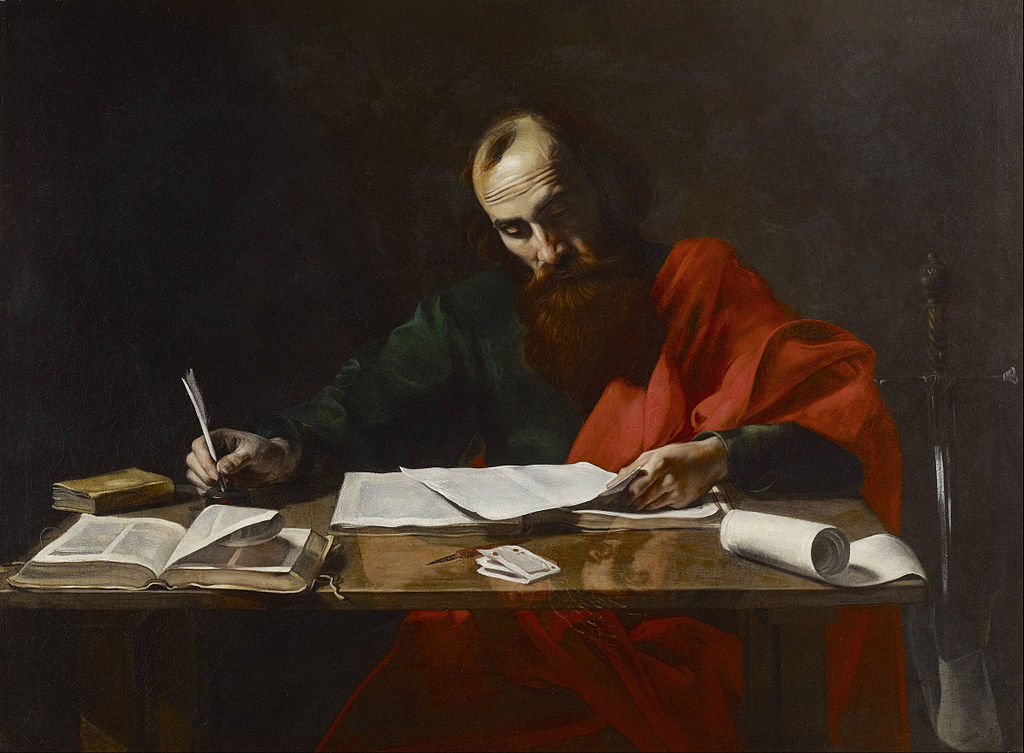

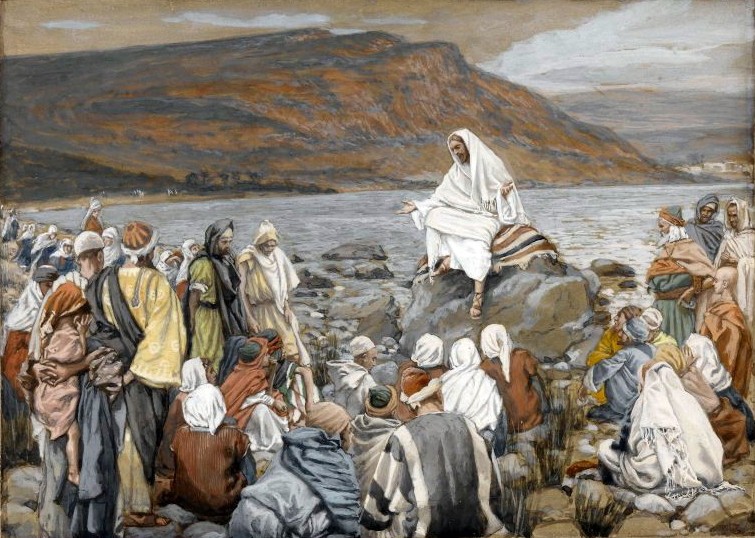

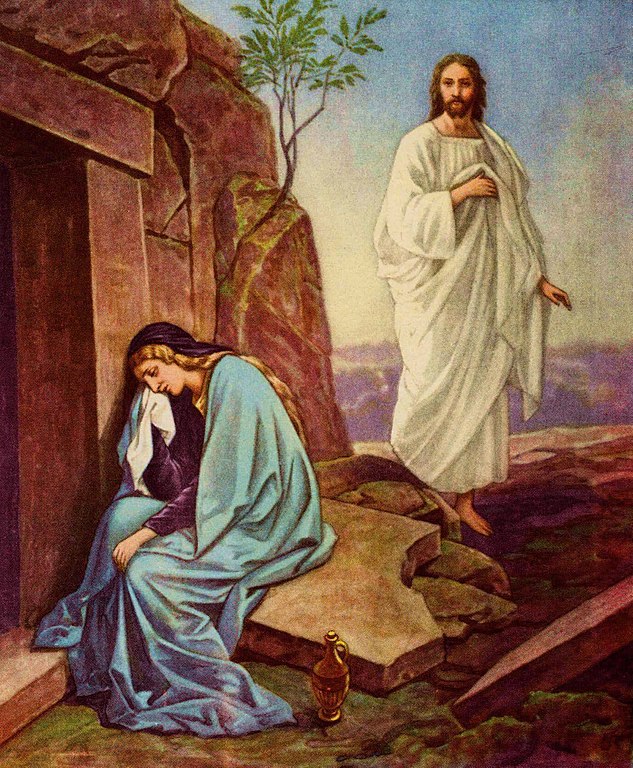

 Rev. Joan M. Kistler